One of the first things homeowners ask us, usually right after the price, is some version of this: “Is that machine going to tear up my lawn?” It is a fair worry. You are paying to get rid of one eyesore, and nobody wants to trade it for ruts across the yard, a dead strip where the grinder sat, or a sprinkler head snapped off under a tire.
The honest answer is that stump grinding always disturbs the spot where the stump was, and it can disturb the path in and out if nobody is paying attention. But with the right machine, sensible ground conditions and a crew that plans the route before they fire anything up, lasting lawn damage is rare. Here is where damage actually comes from, what we do to prevent it, and what you can expect your yard to look like the day after.
Key Takeaways
- The stump spot itself will be disturbed — that is the job. Expect a patch of chips and loosened soil a bit wider than the stump.
- Most real lawn damage comes from the trip in and out, not the grinding. Route planning and ground protection solve most of it.
- Wet ground is the biggest risk. Saturated turf ruts under almost any machine, so timing matters in a rainy Minnesota fall.
- Hidden lines are the most common casualty. Sprinkler heads, invisible dog fence wire and lighting cable should be marked before the job.
- Minor tracks recover on their own in a few weeks of growing season; the stump spot needs topsoil and seed or sod.
- Ask any contractor how they protect turf before you hire them. A vague answer tells you something.
Table of Contents
- The Short Answer: Disturbance, Not Destruction
- Where Lawn Damage Actually Comes From
- How Ground Conditions Change the Risk
- What a Careful Crew Does to Protect Your Yard
- What You Can Do Before Grinding Day
- Repairing the Stump Spot and Any Tracks
- Frequently Asked Questions
The Short Answer: Disturbance, Not Destruction
A stump grinder works by spinning a heavy cutting wheel fitted with carbide teeth and sweeping it back and forth across the stump, chewing the wood into chips. We take the stump 4–6 inches below grade, which means the wheel also cuts through the root flare and the soil tangled in it. So the area where the stump stood, plus a ring a foot or so around it where the surface roots flare out, is going to end up as a mix of chips and loose soil. There is no way to grind a stump without disturbing that spot, and you would not want there to be — that is the part of the yard you are trying to reset.
Everything outside that circle is a different story. The lawn between your driveway and the stump, the turf beside the work zone, the beds and hardscape nearby — none of that has to be damaged. When it is, it is almost always because of the wrong machine, the wrong day, or a crew in a hurry.
Where Lawn Damage Actually Comes From
Getting the Machine to the Stump
Grinders are heavy. Even the compact machines that fit through a backyard gate carry a lot of weight on a small footprint, and larger tow-behind units are heavier still. Rolled across firm, dry turf, a well-driven machine leaves little more than flattened grass that stands back up in a day or two. Turned sharply on soft ground, the same machine can scuff the turf down to dirt or sink a track.
The Work Zone
While grinding, the machine sits in one place and pivots the wheel side to side. The ground under the tracks or wheels takes that load the whole time. On a large stump that can mean a fair stretch of time parked in one spot, which is why where the operator sets up matters as much as how they drive in.
Chips and Debris
The wheel throws chips, soil and the occasional rock. Most of it lands close by, but it can reach siding, windows, cars and neighboring beds if nothing is in the way. Chips left sitting in a thick layer on healthy turf for weeks will also smother the grass underneath.
What Is Hiding Under the Grass
In our experience the most common real damage is not to the grass at all. It is to the things buried just under it: irrigation heads and lines, invisible dog fence wire and low-voltage landscape lighting. None of these are covered by a public utility locate, and they tend to run right past trees. We wrote a whole guide on grinding around sprinkler lines and invisible fences for exactly this reason.
| Source | What It Looks Like | How It’s Avoided or Fixed |
|---|---|---|
| Travel path | Flattened grass, scuffs, ruts on soft ground | Planned route, dry day, ground mats |
| Machine setup spot | Pressed or scuffed turf | Mats under tracks, careful positioning |
| Stump spot | Chips and loose soil | Expected — topsoil and seed or sod |
| Thrown debris | Chips in beds, on siding or cars | Guards, shields, cleanup |
| Buried private lines | Cut sprinkler line or pet fence wire | Marking lines before the job |
How Ground Conditions Change the Risk
The single biggest factor in whether your lawn gets marked up is how wet the ground is. The same machine on the same route can leave nothing on a dry September afternoon and leave ruts after three days of rain.
Wet Ground
Saturated soil loses its strength, and turf roots tear instead of flexing. Low spots, clay soils and yards that stay soggy in spring and late fall are the most vulnerable. If a stretch of the route is soft, we would rather move the appointment a few days or lay down more protection than push through and leave you a repair job. Our post on grinding on wet ground in a Minnesota fall goes deeper on this.
Dry and Firm
Late summer and early fall are usually the easiest on lawns. The ground is firm, grass is actively growing and recovers quickly, and there is still time for it to fill back in before winter.
Frozen Ground
A hard-frozen yard actually carries a machine well, because the turf is protected by a solid layer of frozen soil. The trade-off is that you cannot plant the stump spot until spring, and some jobs are harder to finish cleanly in deep cold.
What a Careful Crew Does to Protect Your Yard
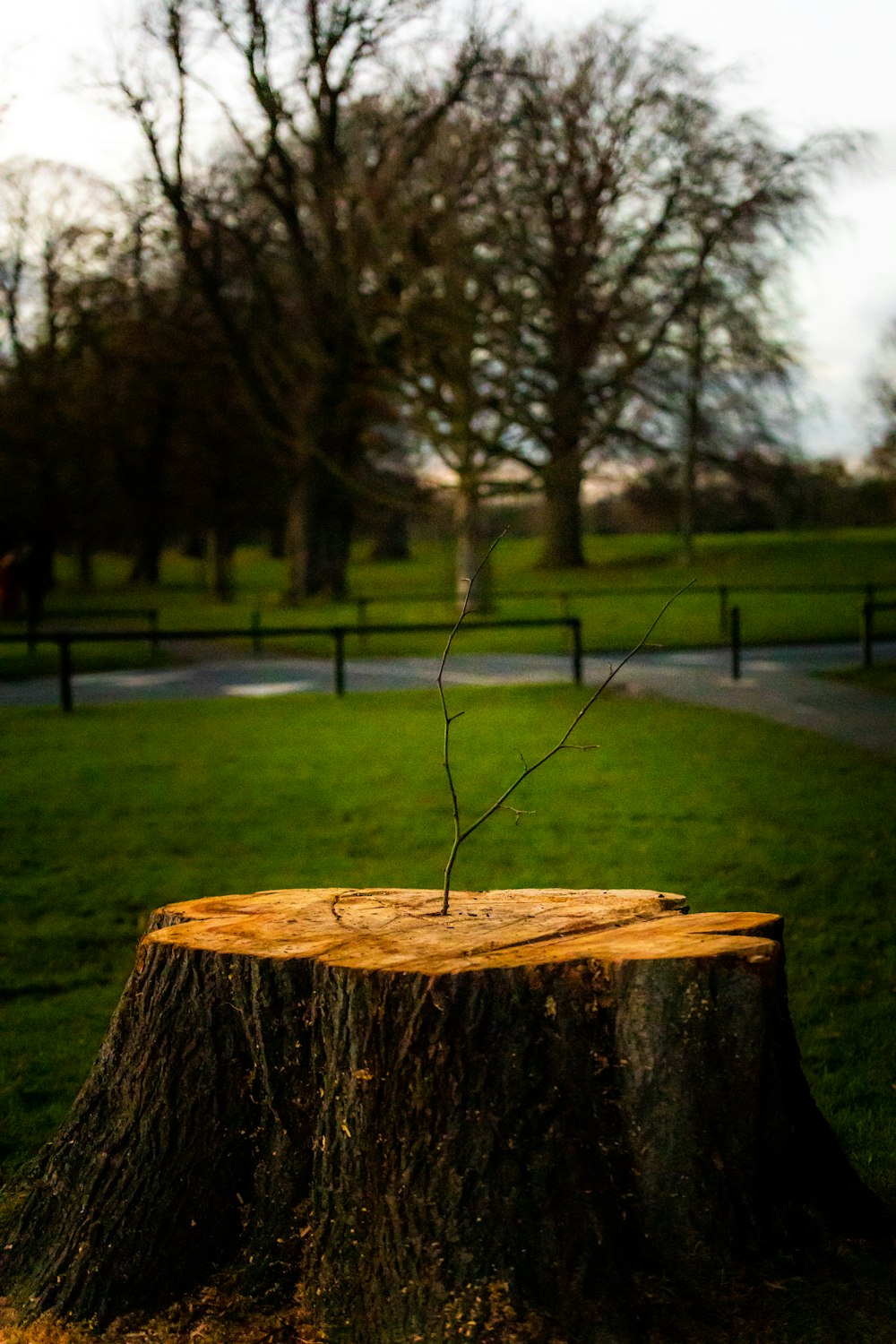
Protecting a lawn is not complicated, but it does take a few extra minutes and some intention. Here is what that looks like on our jobs:
- Walking the route first. Before the machine moves, we look for the firmest path, soft spots, slopes, buried heads and anything that should be avoided.
- Choosing the right machine. Tracked compact grinders spread their weight better than a narrow set of wheels and fit through tight gates. We match the machine to the access, not the other way around. See our notes on backyard gate access.
- Ground protection where it is needed. Plywood or ground mats over soft stretches and under the setup spot keep tracks from biting into turf.
- Straight lines and gentle turns. Most scuffing comes from pivoting in place on grass. Good operators avoid it.
- Debris control. Shields and chip guards keep chips out of beds, off siding and away from vehicles and windows.
- Utility locates. We contact Gopher State One Call before grinding. That covers public utilities like gas, electric and communications — private lines are why we also ask you about irrigation and pet fences.
- Cleaning up. Chips are raked back into the hole or neatly mounded, and scattered chips are cleared off the surrounding lawn so they do not smother the grass.
What You Can Do Before Grinding Day
A few minutes of prep on your end prevents most of the surprises:
- Flag sprinkler heads near the stump and along the likely path in. If you know where the lines run, mark those too.
- Tell us about invisible pet fences and landscape lighting. A rough sketch or photo is plenty.
- Mention septic systems, drain tile or buried downspout lines anywhere near the stump or route.
- Move vehicles, toys, furniture and potted plants out of the way, and unlock the gate if you won’t be home.
- Skip watering the lawn along the route for a day or two before the job if you can.
- Keep pets inside while the machine is running.
If you are not sure how we would reach the stump, send a photo of the approach along with the stump when you request your quote. That lets us plan the route and bring the right machine the first time.
Repairing the Stump Spot and Any Tracks
Light Tracks and Flattened Grass
Grass that was simply pressed down will stand back up on its own within days. Light scuffs usually fill in within a few weeks of active growth. If an area is thin, rake it lightly, add a little seed and keep it moist.
The Stump Spot
This is where the real repair happens. Pull most of the chips out — fresh wood chips mixed into soil tie up nitrogen as they break down and make it harder for grass to establish — then fill with good topsoil, tamp it lightly, leave it slightly mounded to allow for settling, and seed or sod. Our full guide on planting grass after stump grinding walks through it step by step.
Timing in Late September
The prime Minnesota window for fall seeding runs roughly from mid-August to mid-September, so if your job lands now, you have a few options. Sod can still be laid this fall as long as it gets watered in and has time to root before the ground freezes. Seed sown now may germinate but go into winter young. Or you can fill the spot with topsoil and wait for dormant seeding once soil temperatures drop too low for germination in late fall, letting the seed sit through winter and sprout in spring. The University of Minnesota Extension has good guidance on lawn seeding timing.
Stump Gone, Lawn Intact
We grind every stump 4–6 inches below grade, clean up the chips, and leave a level surface ready for topsoil and seed. We plan the route, protect the turf and treat your yard like it is ours. Family owned, licensed and insured, and grinding stumps across the west metro for over 20 years. Take a look at our stump grinding services for the details.
We serve Minneapolis and the western Twin Cities, including Minnetonka, Edina, Eden Prairie, Wayzata, Chanhassen, Excelsior, and every community in between.
Call or text (612) 501-0602, or request a free quote online.
Frequently Asked Questions
Does stump grinding damage your lawn?
The spot where the stump stood will be disturbed, because the grinder cuts 4 to 6 inches below grade through the stump and root flare. The rest of the lawn does not need to be damaged. With a planned route, dry ground and mats where needed, most yards show little more than flattened grass that recovers within days.
Will the stump grinder leave ruts in my yard?
Not on firm, dry ground with a careful operator. Ruts happen when a heavy machine crosses saturated soil or turns sharply on soft turf. If part of the route is soft, we lay down ground protection or reschedule rather than tear up your lawn.
How big an area gets torn up around the stump?
Plan on the stump itself plus a ring roughly a foot around it where the surface roots flare out. Large stumps with big surface roots disturb a wider area. Everything outside that zone should be left intact.
Can stump grinding damage sprinkler lines or an invisible dog fence?
Yes, if nobody knows they are there. Irrigation lines, pet fence wire and landscape lighting are private lines that a Gopher State One Call locate does not mark. Flag heads and tell us where lines run before the job and we will work around them.
Do I need to do anything to prepare my lawn?
Flag sprinkler heads, tell us about pet fences, lighting, septic or drain lines, move vehicles and yard items off the route, and hold off on watering for a day or two beforehand if you can. Keep pets inside while the machine runs.
How long does it take for the lawn to recover?
Pressed grass stands back up in a few days and light scuffs usually fill in within a few weeks of growing season. The stump spot itself needs chips pulled, topsoil added and seed or sod to recover.
Can you grind a stump without driving across the lawn?
Sometimes. If there is a driveway, sidewalk or hard path close to the stump, we will use it. When the only way in is across turf, we pick the firmest route and use ground mats on any soft stretches to protect the grass.