“Before you bring the machine back there — my septic tank is somewhere near that stump.” We hear a version of that sentence often on the bigger, more rural lots out in Minnetrista, Watertown, Waconia and Victoria, where a private septic system does the job a city sewer line does everywhere else. It is a good instinct. A stump grinder is a heavy machine working below the surface, and a septic system is buried infrastructure you cannot see and do not want to guess about.
The honest answer is that most stump grinding near a septic system is perfectly safe, but “most” is doing some work in that sentence. Here is what actually puts a tank or drain field at risk, what does not, how deep your system probably sits, and how to find out for certain before anyone drives a machine into the yard.
Key Takeaways
- Our standard grind, 4 to 6 inches below grade, usually stays well above a septic tank or drain field. The exception is a raised mound system, built close to the surface on purpose.
- The grinder’s weight is the real risk, not its cutting depth. Driving a tracked machine over a drain field can compact the soil or crack a shallow pipe, lid or riser.
- Gopher State One Call (811) does not locate septic systems. It covers public utilities — not the private system in your own yard.
- A stump growing near a drain field is often the source of a real problem, not just cosmetic, since roots are drawn straight to the moisture in septic effluent.
- Mound systems, common across the clay-heavy west metro, should be treated as completely off-limits to heavy equipment.
- A septic as-built diagram settles the question in minutes. Your county file or installer’s paperwork usually shows exactly where the tank and field sit.
Table of Contents
- How Deep Is Your Septic System, Really?
- The Real Risk Is the Machine, Not the Depth
- Why the Stump Might Already Be Part of the Problem
- Finding Your System Before We Show Up
- How We Handle a Job Near a Septic System
- Frequently Asked Questions
How Deep Is Your Septic System, Really?
There is no single answer, since septic systems vary by age, soil and design, but there are useful ranges. A septic tank lid typically sits somewhere between a few inches and two feet down, depending on whether it has a riser brought up to grade — newer installations usually do, older ones often do not. Drain field (or “leach field”) trenches commonly run in the 18-inch to 3-foot range.
Our standard grind takes a stump 4 to 6 inches below grade, which in a typical trench-style system leaves a healthy margin above the pipe. That is the reassuring part. The complication is soil: much of the west metro — Minnetrista, Mound, Watertown, Independence, parts of Waconia and Victoria — sits on heavy clay with a high water table that will not drain a standard buried trench system in a lot of spots.
Mound Systems Change the Math
Where soil will not percolate on its own, the fix is a mound system: a raised bed of sand and gravel capped with topsoil, with drain lines running inside the mound instead of buried in native soil. That can put the working part of the field only a foot or so under the mound’s surface — sometimes less. A noticeably raised, gently domed strip of lawn is a mound system’s signature, and we treat that whole footprint as off-limits, not just carefully measured.
The Real Risk Is the Machine, Not the Depth
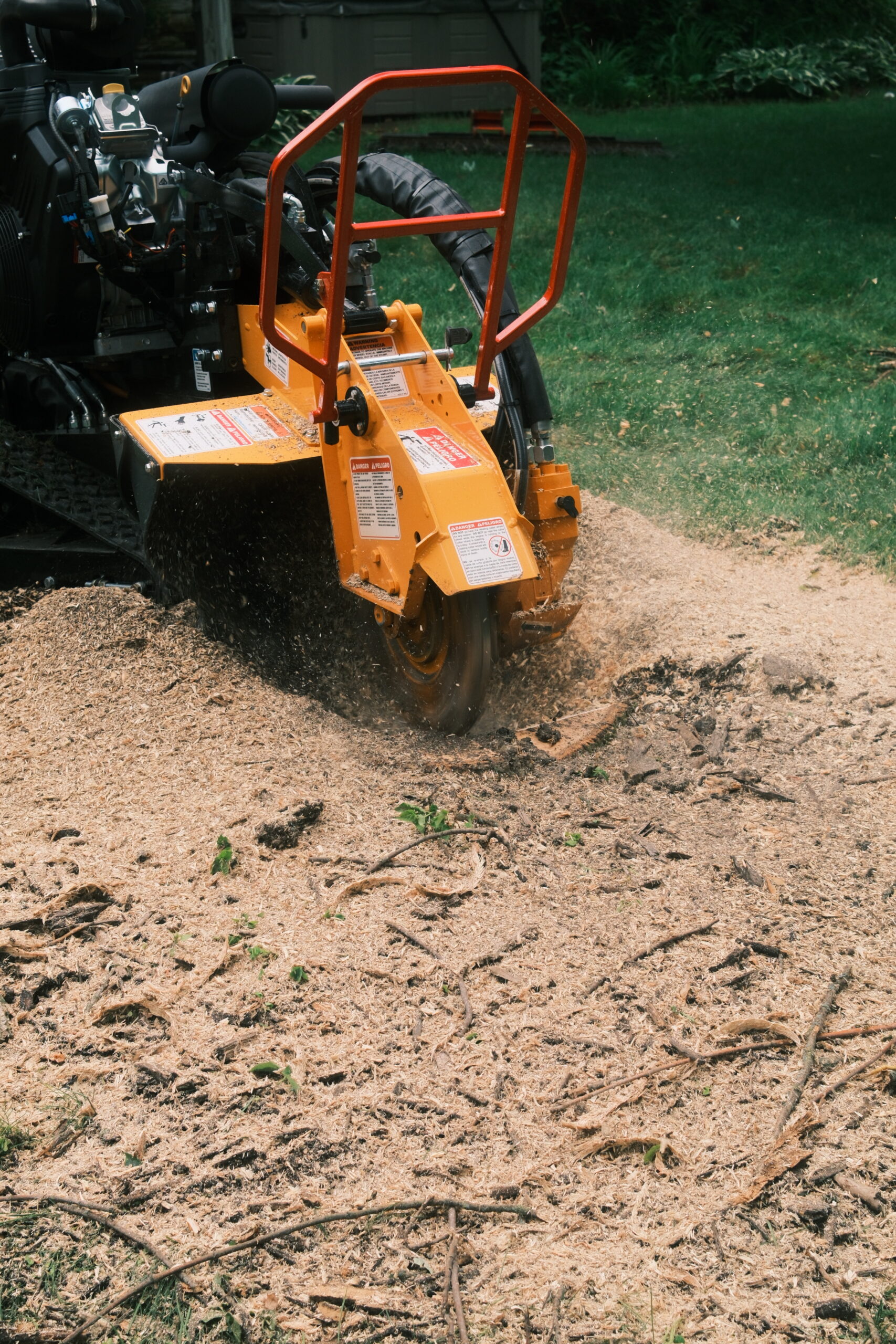
People tend to worry about the cutting wheel reaching too deep. In practice, the bigger threat to a septic system is simpler: a stump grinder is a heavy piece of equipment, and driving it — or parking it — on top of a drain field can do damage the grinding never would.
Saturated or loosely bedded soil around drain lines compacts under load, which reduces the open pore space a drain field depends on to work. A shallow pipe, distribution box or tank lid can crack under a tracked machine’s weight even if the cutting wheel never comes close — the same reason septic installers tell homeowners to keep any heavy equipment, including a loaded pickup, off a drain field entirely.
Our tracked machines spread their weight better than wheeled equipment, which helps on ordinary lawn, but it does not make a drain field or mound safe to drive across. If a stump sits on or right next to one, we route around it, work from outside its footprint, or bring in a smaller handlebar grinder by hand instead of driving the machine in — the same judgment call we make for tight backyard access, just applied to what is underground instead of what is in the way.
Why the Stump Might Already Be Part of the Problem
Roots are opportunists, and septic effluent is exactly the kind of warm, nutrient-rich moisture they chase. Silver maple, willow, cottonwood and boxelder — all common in west metro yards — are aggressive, water-seeking rooters, and a mature tree near a drain field will often send roots straight into it, sometimes finding their way into pipe joints and tank seams over the years.
If a tree was flagged during a septic inspection, or you have had slow drains or a soggy patch over the field, taking it down and grinding the stump is a real fix, not just cleanup — it stops the resprouting and new root growth that would otherwise keep coming. It does not clear roots already inside your pipes; that is a separate job for a septic or plumbing professional with a camera and a root-cutting tool.
Finding Your System Before We Show Up
This is the step people skip, usually because they assume a public utility locate covers it. It does not. Gopher State One Call (811) is free and required before any digging in Minnesota, but it only locates public utilities — gas, electric, cable, fiber. A septic tank, drain field and the pipe connecting them to your house are private infrastructure, exactly like irrigation lines or an invisible dog fence, and nobody comes to mark them for free.
A few ways to pin it down before we grind: check for an as-built diagram — Minnesota septic systems, officially Subsurface Sewage Treatment Systems (SSTS), are permitted through your county, and most keep a file with a site sketch you can request from environmental services. Ask whoever installed or last inspected it — a septic compliance inspection is standard in most Minnesota home sales and usually includes a location sketch. And look for visible clues: risers or access lids poking through the lawn, a gentle mound with different grass, or a strip of yard that dries out first in spring can all mark the footprint without any paperwork at all.
Tell us what you find, even a rough guess, when you request your quote. It changes how we plan the route and, on tight sites, what machine we bring.
How We Handle a Job Near a Septic System
Once we know roughly where a system sits, the approach is simple.
| Situation | What We Do |
|---|---|
| Stump is clearly away from the tank and field | Grind normally, standard depth and route |
| Stump is near the system but the field’s edges are known | Plan the route and setup spot to stay outside that footprint |
| Stump sits on or right at the edge of a mound or field | Hand-dig or use a smaller walk-behind grinder instead of driving the machine in |
| System location is unknown | Pause and get it identified — county records, an as-built, or a septic professional — before grinding |
We also watch ground conditions here the same way we do everywhere else: wet, saturated soil is worse for a drain field’s structure than dry, firm soil, so if the area has been soggy we would rather wait a few days than push a heavy machine across it. Mark what you know, tell us what you suspect, and we work around it rather than through it.
Not Sure What’s Under Your Yard? Let’s Figure It Out Together
Every quote includes a real conversation about what is buried nearby — septic, irrigation, invisible fencing, utility lines — before anyone shows up with a machine. If you are not sure where your system sits, tell us that too; we would rather ask than guess. Family owned, licensed and insured, grinding stumps across the west metro for over 20 years.
We serve Minneapolis and the western Twin Cities, including Minnetrista, Mound, Watertown, Waconia, Victoria, and every community in between. See what we do on our services page.
Call or text (612) 501-0602, or request a free quote online.
Frequently Asked Questions
Can you grind a stump near my septic tank or drain field?
Usually, yes, once we know where the system is. A standard grind stays well above most buried components, and when a stump sits right on or next to a tank, field or mound, we hand-dig or use smaller equipment instead of driving a heavy machine across it.
Will Gopher State One Call (811) mark my septic tank or drain field?
No. Gopher State One Call locates public utilities like gas, electric and telecom. Your septic system is private infrastructure, the same as irrigation lines or an invisible dog fence, and it is your responsibility to locate it before any digging or grinding nearby.
How deep are septic tanks and drain fields buried in Minnesota?
It varies. Tank lids often sit anywhere from a few inches to about two feet down depending on whether a riser was installed. Standard drain field trenches commonly run 18 inches to 3 feet deep. Mound systems are different — their drain lines sit inside a raised bed of sand only a foot or so under the surface of the mound itself.
Can stump grinding equipment damage a septic system even if it doesn’t dig that deep?
Yes, and it is the more common risk. A several-thousand-pound tracked grinder can compact the soil around a drain field or crack a shallow pipe or lid just by driving over it, regardless of how deep the cutting wheel goes. We route around a known system rather than crossing it.
Should I worry about tree roots from the stump getting into my septic system?
It is worth considering for water-seeking species like silver maple, willow, cottonwood and boxelder growing near a drain field. Grinding the stump removes the ongoing source of new root growth, though it will not clear roots already inside pipes — that needs a septic or plumbing professional.
What is a mound septic system, and why does it matter for grinding?
A mound system is a raised bed of sand and gravel built above natural grade for lots where the native soil will not drain well enough on its own — common across parts of the clay-heavy west metro. Because its drain lines sit close to the surface, we treat the whole raised footprint as off-limits to heavy equipment rather than just measuring a safe distance.
What should I do if I don’t know exactly where my septic system is?
Check with your county’s environmental services department for an as-built diagram from when the system was permitted, or ask whoever last inspected it — compliance inspections are standard in most Minnesota home sales and usually include a site sketch. Visible clues like risers, a raised mound, or a strip of lawn that dries differently can help too.
Does grinding near a septic system cost more?
Sometimes. Hand-digging or a smaller walk-behind grinder takes longer than our standard equipment, which can change the price. Tell us about a nearby septic system when you request a quote so it is reflected accurately rather than becoming a surprise on grinding day.