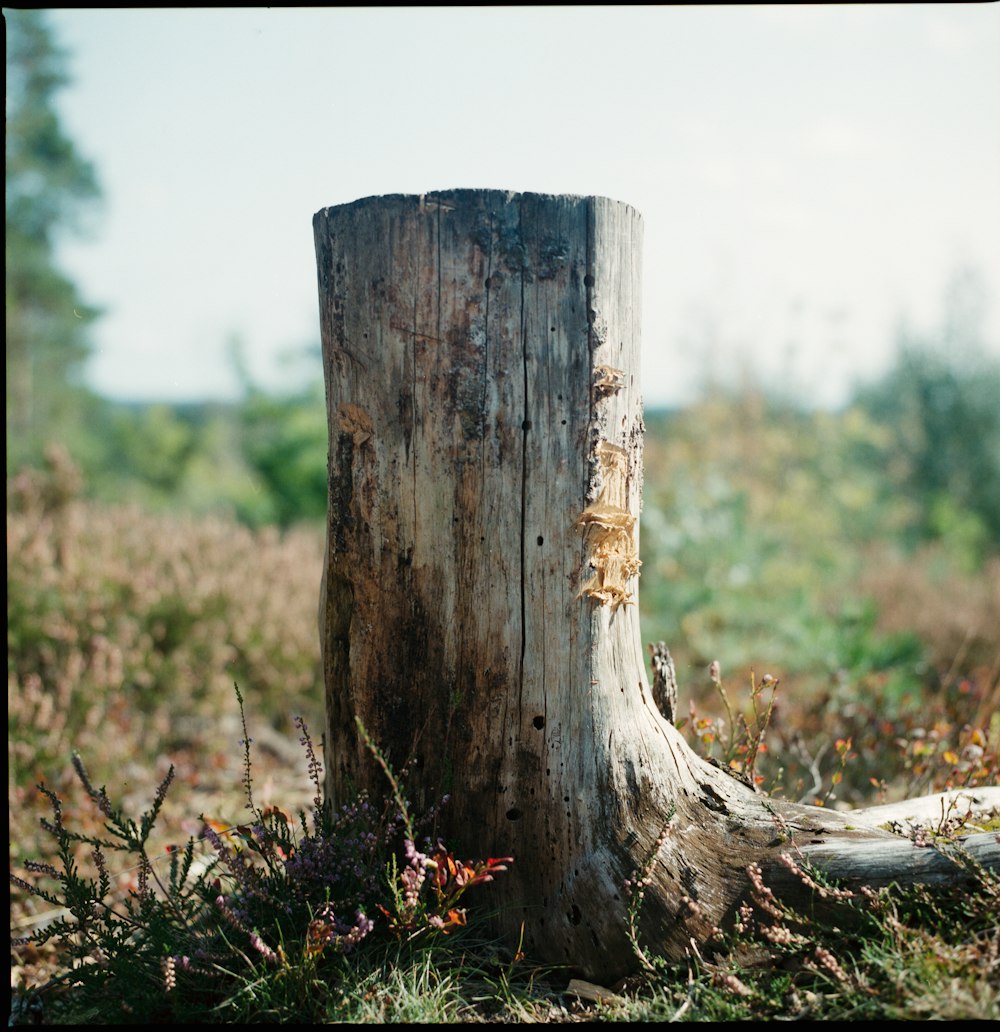
If you have been walking past a stump all summer telling yourself you will deal with it eventually, this is the week eventually arrives. The Twin Cities gets one truly reliable window each year for starting new grass — roughly mid-August through mid-September — and it is open right now. A stump ground this week can be backfilled topsoil by the weekend and germinating seed a week later, with the whole scar blending into the lawn before the snow flies.
Wait a month and the math changes. Seed that goes down in October rarely roots before freeze-up, the bare patch sits there all winter, and you are solving the same problem again next May. Here is how the late-summer window works, why the stump has to come out first, and what the schedule looks like when you count backward from the first hard frost.
Key Takeaways
- Mid-August through mid-September is the best time to seed grass in the Twin Cities — warm soil for fast germination, cooling air, and enough runway before freeze-up.
- The stump has to come out first, and the whole sequence — grind, clear chips, backfill, seed — takes days, not weeks.
- New grass wants about six weeks of growth before a hard freeze, so the real deadline is seed in the ground by mid-September.
- Late summer means the driest, firmest ground of the year — the machine crosses your lawn without leaving ruts.
- Miss the window and you still have options: dormant seeding in November, or grind now and seed in spring.
- This is our busiest stretch of the season, so the earlier you book, the more of the window you keep.
Table of Contents
- Why Mid-August Through Mid-September Is the Window
- The Stump Has to Come Out First
- The Countdown, Working Backward From Freeze-Up
- The Dry-Ground Bonus
- What If You Miss the Window?
- Frequently Asked Questions
Why Mid-August Through Mid-September Is the Window
Minnesota lawns are cool-season grasses — Kentucky bluegrass, fine fescues, perennial ryegrass. They germinate fastest in warm soil but grow best in cool air, and there is exactly one stretch of the calendar that offers both: late summer. The soil is still holding July heat, so seed sprouts in a week or two instead of a month. The days are getting shorter and cooler, so seedlings are not baking the way they do in June.
There are two quieter advantages working for you too. Crabgrass and most annual weeds are done germinating for the year, so new grass is not fighting for the same square inch of dirt the way it does in spring. And early-fall rain tends to help with the watering. The University of Minnesota Extension points to this same late-summer window as the most dependable time to establish turf here, with spring a clear second place.
The Stump Has to Come Out First
You cannot seed around a stump and hope for the best. The stump occupies the exact spot you want grass in, the roots at the surface make the area impossible to level, and a slowly rotting stump keeps the ground shifting for years. If the goal is lawn, the sequence is fixed: grind, clear, backfill, seed.
The good news is that none of those steps takes long. We grind stumps 4 to 6 inches below grade, clean up the chips, and leave a level surface — for most residential stumps the grinding itself is under an hour. Backfilling with topsoil and mixing in some slow-release nitrogen is an afternoon of homeowner work, or something to arrange as part of the job. Our full guide to planting grass after stump grinding walks through the prep step by step, including why seed thrown directly on fresh grindings almost always fails.
The bottleneck is not the work. It is the calendar — and right now the calendar is on your side.
The Countdown, Working Backward From Freeze-Up
New grass wants roughly six weeks of growing time before a hard freeze shuts it down for the year. The first frost around the Twin Cities typically shows up in early October, and the soil keeps roots growing for a few weeks past that — which is why seed in the ground by mid-September nearly always makes it, and seed in the ground in October is a coin flip at best.
Here is what the schedule looks like if you start this week:
| When | What Happens | Why It Matters |
|---|---|---|
| This week | Get a free quote, book the grind | Late summer books up fast |
| Days 1–2 | Stump ground, chips cleared | Most stumps take under an hour |
| Days 3–7 | Backfill topsoil, level slightly high | Ground settles as roots decay |
| By mid-September | Seed down, water daily | Warm soil germinates in 1–2 weeks |
| Early October | Grass established, mowed once or twice | Roots keep growing after frost |
Notice how little slack there is. A quote this week puts the whole sequence comfortably inside the window. A quote in late September puts your seed into cold soil with the clock nearly run out.
The Dry-Ground Bonus
There is a second reason late summer is the easiest time of year to get this done: the ground is at its firmest. Our grinders are compact, self-propelled machines, but any machine crossing a soggy April lawn can leave tracks you will be repairing along with the stump spot. In late August the soil is dry and solid, the machine rolls across the yard without sinking in, and the only disturbed ground when we leave is the spot where the stump used to be.
That firmness matters most for backyard stumps — the ones that require crossing the whole lawn to reach. If your stump is behind the house, check our guide to gate access and backyard grinding, and know that this is the season to do it. The same job in early spring often means waiting for the yard to dry out.
What If You Miss the Window?
Life happens, and some stumps will still be standing on September 20. You have three reasonable paths, in this order.
Dormant seeding
Once soil temperatures drop below about 50°F for good — usually late October into November here — you can put seed down that simply waits out the winter and germinates first thing in spring. It works, but germination rates are lower and a wet spring can wash seed around, so it is the backup plan rather than the plan.
Seed in spring
Late April into May is the second-best seeding window in Minnesota. Grass started in spring has to survive its first summer as a seedling, which means more watering and more babysitting, but plenty of lawns get established this way.
Grind now regardless
Whatever you do about seed, do not let the stump winter over just because the seeding window closed. Grinding gets harder to schedule as freeze-up approaches, the stump does not shrink or get cheaper by waiting, and having the spot ground, backfilled, and settled over winter means you are first in line to seed the moment spring opens. The stump is the slow-to-schedule part; seed can go down in an afternoon.
Get on the Schedule While the Window Is Open
We are family owned, licensed and insured, and we have been grinding stumps across the west metro for over 20 years. Every job gets the same finish: stump taken 4 to 6 inches below grade, chips cleaned up, surface left level and ready for topsoil and seed. See everything we do on our services page, or get a feel for pricing with our Minnesota stump grinding cost guide.
We serve Minneapolis and the western Twin Cities suburbs, including Minnetonka, Eden Prairie, Wayzata, Chanhassen, Edina, and every community in between. Call or text (612) 501-0602, or request a free quote online.
Frequently Asked Questions
When is the best time to plant grass seed in Minnesota?
Mid-August through mid-September. The soil is still warm enough for fast germination, the cooling air is easy on seedlings, annual weeds are done competing, and there is enough time for roots to establish before freeze-up. Spring is the second-best option.
How soon after stump grinding can I plant grass?
Right away, as long as you prep the spot properly. Clear the wood chips, backfill with clean topsoil mounded slightly above grade, mix in a slow-release nitrogen fertilizer, and seed. The ground does not need to rest — but seed sown directly into fresh grindings will fail.
How late can I seed grass in the Twin Cities?
Mid-September is the practical cutoff for reliable results. Seed sown later germinates into cold soil with too little time to root before freeze-up. After that point you are better off waiting for dormant seeding in November or seeding in spring.
What is dormant seeding?
Seeding after the soil has cooled below about 50°F for the season — typically late October or November in the Twin Cities. The seed sits dormant through winter and germinates in early spring. It works, but germination is less reliable than late-summer seeding, so treat it as the backup plan.
Will stump grinding tear up my lawn in late summer?
Late summer is actually the gentlest time of year for it. The ground is dry and firm, so our compact machines cross the lawn without sinking in or leaving ruts. The only disturbed area when we leave is the spot where the stump was.
How much does stump grinding cost in Minnesota?
Most stumps in the Twin Cities run roughly $3 to $7 per inch of stump diameter, and exact pricing depends on the stump’s size, species, and access. The only way to know your number is a free quote — call, text, or send a photo and we will get you one fast.
How long does the grinding itself take?
Most residential stumps take under an hour from setup to cleanup, and several stumps can usually be done in a single morning. The grinding is never the bottleneck in a reseeding project — the seeding calendar is.