Every October the same thing happens in west metro yards. The leaves come down, the sprinkler guy books out, the last mow gets squeezed in between frosty mornings, and a stump that has been sitting in the corner of the lawn all summer suddenly disappears under a blanket of oak leaves. By December it is under snow, and by April you have forgotten exactly where it was until the mower finds it.
Fall cleanup is a good time to deal with it, but the order of jobs matters. Do them out of sequence and you end up paying for a second trip, raking the same area twice, or reseeding a spot that gets dug up again. Here is the checklist we would follow if it were our own yard, and exactly where stump grinding fits.
Key Takeaways
- Do tree work first, then grinding, then soil and seed. Each job leaves a mess the next one has to clean up.
- Clear leaves off the stump before the crew arrives. Buried stumps are harder to find, size and quote.
- Mark sprinkler heads and request utility locates early. Both can add days to the schedule, and fall is busy.
- Grind before the ground freezes if you want to backfill and seed. Frozen ground can be ground, but the soil work has to wait for a thaw.
- Budget roughly $3–$7 per inch of stump diameter. The exact price depends on the stump, so get a free quote.
Table of Contents
- The Order That Saves You a Second Trip
- Leaves and Stumps
- Tree Removal and Trimming Come First
- Utilities and Sprinklers Before the Machine Arrives
- Where Stump Grinding Fits
- The Spot Itself: Chips, Topsoil and Seed
- Realistic Deadlines Before Freeze-Up
- Frequently Asked Questions
The Order That Saves You a Second Trip
Think of fall cleanup as a chain. Anything that drops debris has to happen before anything that cleans debris up, and anything that digs has to happen before anything that levels or seeds. Stump grinding sits in the middle of that chain: after the trees are down, before the grading and seeding.
| Step | Job | Why It Goes Here |
|---|---|---|
| 1 | Tree removal and trimming | Makes the biggest mess and creates stumps |
| 2 | Mark sprinklers and request locates | Protects lines and avoids delays |
| 3 | Stump grinding | Digs below grade and leaves chips |
| 4 | Clear chips, backfill, level | Needs workable, unfrozen soil |
| 5 | Leaf cleanup and last mow | Cleans up after everything above |
| 6 | Sprinkler blowout | Done once all digging is finished |
| 7 | Seed or cover the spot | Dormant seeding waits for cold soil |
The one step people most often flip is leaf cleanup. If you rake in early October and grind in late October, the grinder and the chips bring a fresh layer of mess right back onto the lawn. Do the heavy raking after the digging is done, and just clear the area around the stump beforehand.
Leaves and Stumps
Why Leaves Hide Stumps
A low stump, especially one already cut close to the ground, makes a perfect leaf trap. By mid-fall it can be invisible, and we have seen homeowners point at a patch of lawn and say “it is somewhere around there.” Before a quote or a crew visit, rake the stump and a few feet around it clear. It takes five minutes and lets us measure the diameter and check for rocks, wire or an old fence line. If you want to know how we size a job, see our guide on how to measure a stump for a quote.
Do Not Let Leaves Sit on the Lawn
A thick, wet mat of leaves can smother turf over winter, so most lawn guidance in Minnesota is to rake them or mulch-mow them rather than leave them lying there. That also applies around a grinding spot. Chips and leaves together make a soggy layer that holds moisture against the soil, and it is harder to spot low areas when everything is covered.
Tree Removal and Trimming Come First
If a tree is coming down this fall, schedule that before the grinding, not after. Once the leaves drop, bare branches make it easier to see which limbs are dead, so fall is a natural time to take out problem trees. The stump left behind can be ground the same week or soon after. We cover the timing in our post on stump grinding after tree removal.
Ask your tree crew to cut the stump as low as they safely can, and have logs and brush hauled out of the way. A grinder needs room to swing.
Utilities and Sprinklers Before the Machine Arrives
Utility Locates
Grinding goes below the surface, so utility locates matter. Minnesota requires a locate request before most digging, and the standard lead time is at least 48 hours, not counting weekends and holidays. Fall is a busy season for locates because everyone is trying to finish yard projects, so ask early. Our guide to Gopher State One Call and stump grinding explains how it works and what we do on our end.
Sprinkler Lines and Landscape Lighting
Stumps and irrigation lines tend to live in the same lawn. Flag every head you can see, and tell us if a zone runs near the stump. Grinding to the usual 4 to 6 inches below grade will not always reach buried lines, but shallow ones, low-voltage lighting and invisible fence wire can be damaged by a careless pass. Read more in our post on grinding around sprinkler lines, invisible fences and landscape lighting.
Then schedule your sprinkler blowout for after the grinding is done. If the system is already winterized, there is no harm, but any line that gets nicked is something you want to find out about in spring, not in October.
Where Stump Grinding Fits
Grinding is the one job on this list that changes the shape of the ground. A grinder chews the stump down 4 to 6 inches below grade, which is our standard depth, and leaves a pile of chips where the stump used to be. We clean up the debris and leave the surface level, so you can move straight to topsoil and seed.
Grinding vs. Removal
If you are weighing options, grinding is usually faster, less disruptive and cheaper than pulling out a full stump and root ball. Digging the whole thing out leaves a large hole and a lot of dirt to haul. Our comparison of stump grinding vs. stump removal walks through when each makes sense.
What It Costs
As a general guide, stump grinding in the west metro runs roughly $3–$7 per inch of stump diameter. A larger stump, tight access, extra roots or several stumps at once all change the number, and many companies have a minimum charge for a single small stump. The only way to get a real price is a quote. Request one at our contact page and we will tell you what we see.
The Spot Itself: Chips, Topsoil and Seed
After grinding, the pile of chips is mostly wood, and wood does not grow grass. Scoop the bulk of it out before the ground freezes, then backfill with clean topsoil and mound it a few inches above grade. Roots left in the ground keep decomposing for a year or two, so the spot will settle.
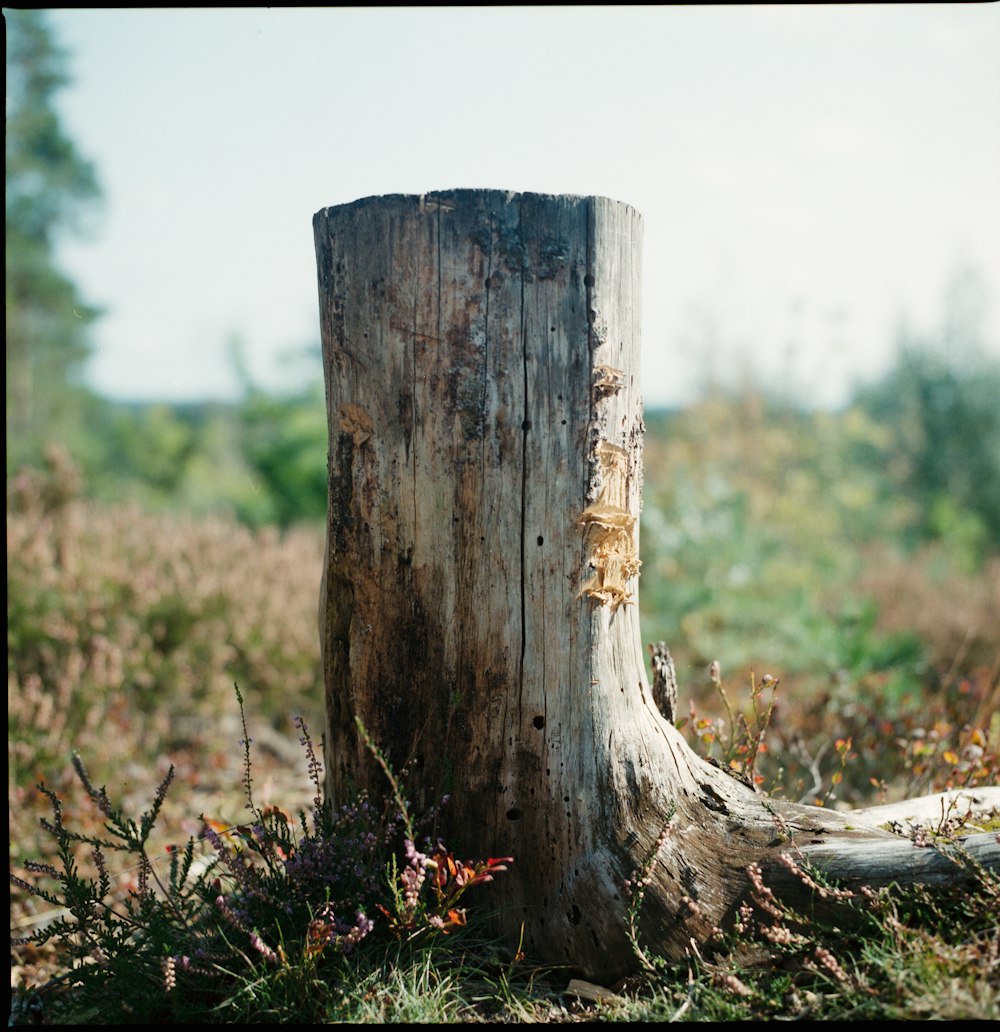
Seeding is where fall catches people out. The best window for cool-season lawns in the Twin Cities is mid-August through mid-September, so by mid-October you are past it. The answer is dormant seeding once the soil is cold, which we explain in our dormant seeding guide. Either way, the prep work has to happen while the ground is still workable.
Realistic Deadlines Before Freeze-Up
There is no magic calendar date, and the weather decides. Some years we are grinding comfortably into mid-November; other years a hard cold snap arrives in late October. Here is a rough way to think about it.
- Now through early November: best window. Ground is workable, so grinding, backfill and leveling all go smoothly.
- Mid-to-late November: still possible, but expect the ground to start stiffening, and schedule is tighter.
- December onward: frozen ground can still be ground in many cases, but backfilling and seeding wait for spring. See our guide to grinding in frozen ground.
If you are on the fence, remember that a stump left through winter is a stump you cannot see. Our post on hidden stumps under the snow covers why that becomes a problem for snow removal and spring mowing.
Get the Stump Off Your Fall List
We do the grinding, the chips are handled, and the spot is left level and ready for you to finish. Family owned, licensed and insured, and grinding stumps across the west metro for over 20 years.
We serve Minneapolis and the western Twin Cities, including Minnetonka, Eden Prairie, Wayzata, Chanhassen, Excelsior, and every community in between. See what we do on our services page.
Call or text (612) 501-0602, or request a free quote online.
Frequently Asked Questions
Should I grind the stump before or after raking leaves?
Rake the heavy leaf cover off and away from the stump first, so the crew can see it and reach it, then grind. Leaves that drift back over the spot afterward are easy to clear. Grinding first and raking later is fine too, as long as the chip pile is not buried under leaves before you can move it.
Can stump grinding wait until spring?
It can, and plenty of stumps do wait. The trade-off is that a stump you can no longer see under snow is easy to forget, and a frozen job cannot be backfilled or seeded until the thaw. Grinding in fall lets you finish the soil work in one season.
Do I need to call 811 before a stump grinding job?
Minnesota law requires a locate request before most digging, and utility locates are normally requested at least 48 hours ahead, not counting weekends and holidays. We walk customers through it, and our Gopher State One Call guide explains what to expect.
Should I blow out my sprinklers before or after grinding?
Mark the heads and lines first, then schedule the blowout. If the stump is near a zone, tell us where the lines run so we can grind with care. Most west metro systems get blown out before a hard freeze, so it helps to book the grinding around that date.
What should I do with the wood chips over winter?
Move the bulk of them off the spot before the ground freezes, then use them as mulch in beds and on paths. If you cannot get to it, a thin chip layer left over winter will not hurt anything, but plan to clear it before you seed.
How much does stump grinding cost in fall?
Fall pricing follows the same rule as the rest of the year: roughly $3–$7 per inch of stump diameter, depending on the stump, access and number of stumps. A free quote is the only way to get a firm number for your yard.
What is the last date to book stump grinding before freeze-up?
There is no single date, because it depends on the weather. Grinding is often possible well into November, and frozen ground can still be ground, but backfilling and seeding get harder. Our October and November booking guide covers the details.