The crew dropped the tree, bucked up the trunk, hauled off the brush, and pulled out of the driveway. Job done — except for the fresh stump sitting in the middle of your yard. If that is where you are right now, you are in good company. Fall is the busiest tree removal season in the Twin Cities, and a lot of those removals end exactly this way: tree gone, stump left behind as a separate problem.
The two questions we hear most from west metro homeowners are whether the stump needs to sit and dry out before it can be ground, and whether the tree company or someone else should do the grinding. The short answers are no, and it depends — and getting both right can save you real money and a spring full of sucker sprouts. Here is how stump grinding after tree removal actually works in Minnesota.
Key Takeaways
- There is no waiting period. A stump can be ground the same day the tree comes down — fresh, green wood grinds just fine.
- Removal quotes often do not include the stump. Grinding takes a different machine and is usually a separate line item, so read your quote carefully.
- Letting a stump “dry out” has no upside. Waiting invites regrowth from sucker-prone species, gives insects a home, and delays your yard repair.
- Call Gopher State One Call before grinding. Utility locates are free and required by Minnesota law — plan on about two business days of lead time.
- Fall has a real deadline. Once the ground freezes, most residential grinding waits for a thaw. Get on the schedule before freeze-up.
Table of Contents
- Why the Removal Crew Left the Stump
- Do You Have to Wait to Grind a Fresh Stump?
- Who Should Do the Grinding?
- Why Fall Is the Right Time in Minnesota
- What to Line Up Before the Grinder Arrives
- What Stump Grinding Costs After a Removal
- Frequently Asked Questions
Why the Removal Crew Left the Stump
Tree removal and stump grinding are two different jobs done with two different machines. Taking a tree down safely is climbing, rigging, and chainsaw work. Getting rid of the stump means bringing in a grinder — a purpose-built machine with a carbide-toothed wheel that chews the stump into chips well below the surface of your lawn. Most removal crews cut the trunk off as low as they comfortably can, somewhere between ankle and knee height, and that is where the removal contract ends unless grinding was specifically included.
A flush-cut stump is not a finished yard. It is still a solid block of wood and roots that will not rot away for a decade or more, and you cannot rake soil over it and plant grass. Getting the spot truly ready to be lawn again means grinding 4 to 6 inches below grade — deeper where something will be replanted. That is the work we do every day; you can see how it compares to full stump removal in our guide to grinding vs. removal, or read about the whole process on our services page.
Do You Have to Wait to Grind a Fresh Stump?
No. This is one of the most persistent myths in the business — the idea that a stump has to season or dry out before a grinder can handle it. Grinder teeth do not care whether the wood is green or dry. If anything, fresh wood cuts a little easier than seasoned wood, because dried hardwood gets denser and more brittle as the moisture leaves it. We grind stumps the same week — sometimes the same day — as the removal all the time, and the machine never notices the difference.
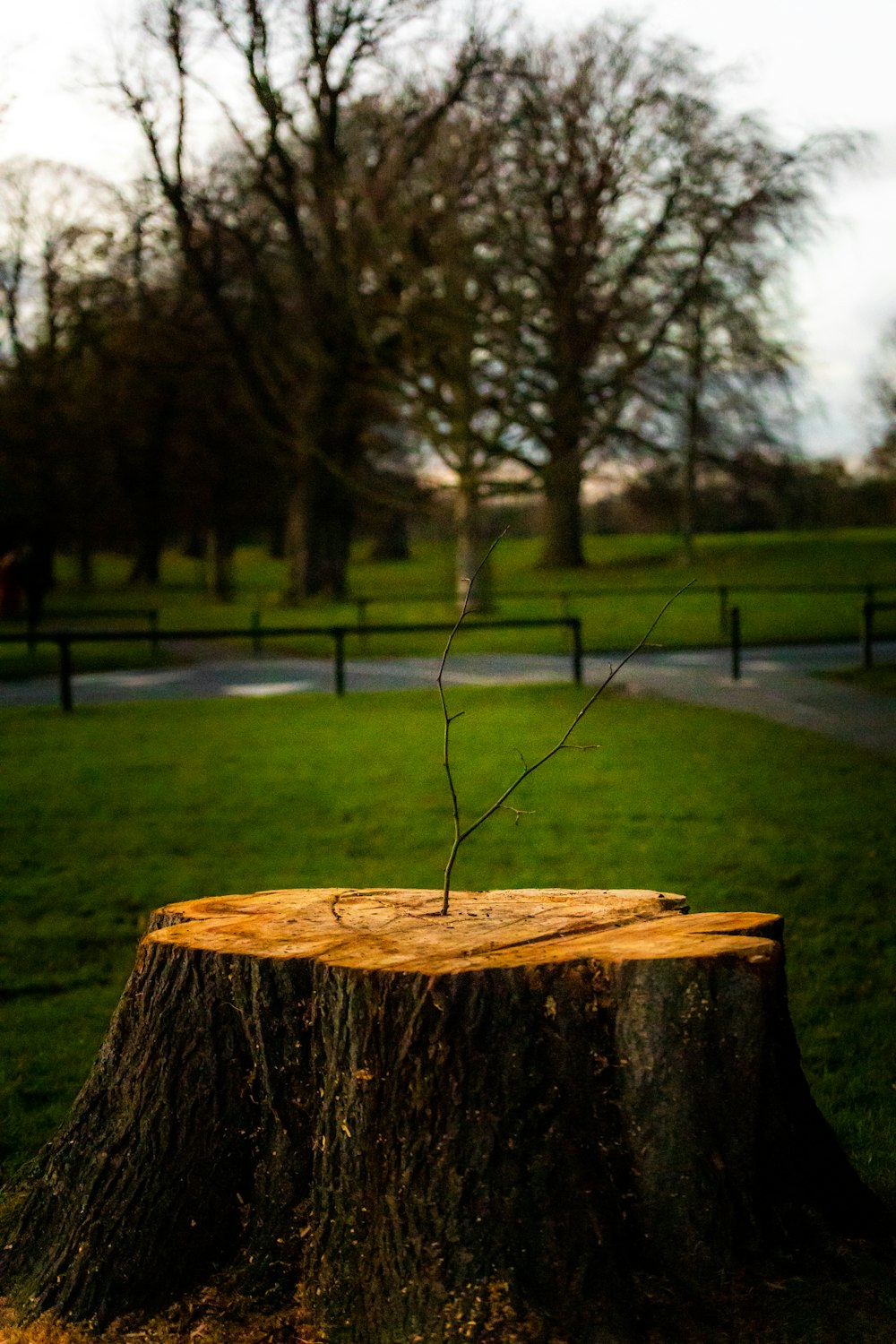
Waiting, on the other hand, has real downsides. Sucker-prone species like silver maple, boxelder, cottonwood, and buckthorn treat a fresh-cut stump as an invitation to resprout, and by next June you can have a shrub of vigorous shoots where the trunk was. A stump left standing also draws carpenter ants and other insects while it slowly softens. And the longer it sits, the longer you live with a tripping hazard you have to mow around. We covered the full slow-motion story in what happens if you leave a tree stump in the ground — the short version is that nothing about it improves with age on a timeline that helps you.
Who Should Do the Grinding?
After a removal you have three realistic routes to a stump-free yard, and they are not priced the same.
| Option | How It Works | Worth Knowing |
|---|---|---|
| Tree service add-on | The removal company returns or sends a sub | Convenient, but grinding is often subcontracted with a markup |
| DIY grinder rental | You haul and run a rental machine | Rental units are small; a big stump can take hours |
| Dedicated stump grinder | A specialist arrives with the right machine | Usually the best price per stump — it is all they do |
There is nothing wrong with letting your tree service handle it, and some do it well. But many tree companies do not own a grinder at all — they subcontract the stump and pass the cost along. Getting a direct quote from a dedicated grinding company frequently beats the add-on price, especially when there is more than one stump. And if you are tempted by the rental route, run the numbers in our rental vs. pro comparison first; by the time you count the trailer hitch, the hours, and the smaller machine, the savings usually evaporate.
Why Fall Is the Right Time in Minnesota
September through November is peak removal season in the west metro, and for good reason: crews are clearing summer storm damage, taking down ash trees killed by emerald ash borer, and getting hazard trees out before winter ice and snow load them up. Every one of those removals produces a stump — and fall is also the smart time to deal with it.
The practical deadline is the ground freeze. Once Minnesota soil locks up hard — typically sometime in November or early December depending on the year — most residential grinding waits for a thaw. Grind before freeze-up and the spot settles over winter, ready for topsoil and seed first thing in spring. Grind in early September and you may even catch the tail end of the prime seeding window. We walk through the freeze timeline in our fall stump grinding guide, and what comes after the grind in planting grass after stump grinding.
There is a scheduling angle too. Tree crews book out in fall, and so do grinders. Calling for a stump quote the same week your tree comes down — or before — keeps you off the back of the line.
What to Line Up Before the Grinder Arrives
A little preparation makes the grinding visit quick and drama-free.
Utility locates come first
Grinding goes below grade, so Minnesota law treats it like any other digging: Gopher State One Call gets notified before the work happens. The locate is free for homeowners, and the law requires at least 48 hours of notice, not counting weekends and holidays — so plan on about two business days. A reputable grinding company will handle or confirm the locate as part of the job; if an outfit shrugs it off, that tells you something.
Walk the yard
Flag anything hidden near the stump: irrigation heads, an invisible dog fence, landscape lighting wire, shallow downspout drains. The locate marks public utilities, not private lines you or a previous owner added. Also think about the path from the street or driveway to the stump — our machine fits through standard gates, but it is worth mentioning tight access when you book.
Decide on the chips
Grinding a stump produces a mound of wood chips bigger than most people expect. Standard practice is to backfill the hole with chips and leave the surface level, but you can also have them hauled so the hole is ready for topsoil. Decide before the visit and the crew can plan for it.
What Stump Grinding Costs After a Removal
Every stump is different, so treat any number you read online — including ours — as a starting point, not a quote. In Minnesota, most residential stump grinding lands in the range of $3 to $7 per inch of stump diameter, measured at the widest point near the ground, with minimum charges for small single stumps and better per-stump pricing when several are done in one trip. Species, access, and how low the removal crew cut all move the number. Our full Minnesota stump grinding cost guide breaks down every factor — and an exact price takes a free quote, which usually needs nothing more than a couple of photos and an address.
Tree Down? Let’s Finish the Job
A removal is not really done until the stump is gone and the ground is level. We grind 4 to 6 inches below grade, clean up the chips, and leave a surface you can rake, fill, and seed — the same standard we have held across the west metro for over 20 years. Family owned, licensed and insured. Honest work, professional results. That’s our statement.
We serve Minneapolis and the western Twin Cities, including Minnetonka, Eden Prairie, Wayzata, Chanhassen, and every community in between.
Call or text (612) 501-0602, or request a free quote online.
Frequently Asked Questions
How soon after tree removal can a stump be ground?
Immediately. There is no required waiting period — a stump can be ground the same day the tree comes down. The only scheduling constraint is the utility locate, which needs about two business days of lead time if one is not already on file for the property.
Does tree removal include stump grinding?
Often it does not. Grinding uses a separate machine and is usually quoted as its own line item, so check your removal contract. If it says the tree will be cut to grade or flush, the stump is staying unless you arrange grinding separately.
Is a fresh stump harder to grind than an old one?
No. Green wood actually cuts a little easier than seasoned wood, which grows denser as it dries. Very old, half-rotted stumps grind easiest of all, but waiting years for rot is not a practical plan for a yard you want to use.
Should I let the stump dry out before grinding?
There is no benefit to waiting. Meanwhile, species like silver maple, boxelder, and buckthorn can resprout vigorously from a fresh stump, and standing stumps attract carpenter ants. Grinding promptly avoids all of it.
Can stumps still be ground in late fall in Minnesota?
Yes — right up until the ground freezes hard, typically sometime in November or early December in the west metro. After freeze-up, most residential jobs wait for a thaw, so late fall booking gets tight. Earlier is easier.
Do I need a utility locate before stump grinding?
Yes. Grinding goes below grade, so Minnesota law requires notifying Gopher State One Call at least 48 hours in advance, excluding weekends and holidays. The locate is free for homeowners, and a professional grinding company will handle or verify it as part of the job.
Will the stump grow back if I wait to grind it?
Some species will try. Silver maple, boxelder, cottonwood, and buckthorn commonly send up sucker shoots from the stump and roots. Grinding removes the stump and its bud tissue below grade, which stops regrowth in most species — stray root suckers, if any, are easy to mow out.
How much does stump grinding cost after a tree removal?
Most Minnesota residential grinding falls roughly between $3 and $7 per inch of stump diameter, with minimums for single small stumps and better rates for multiple stumps in one trip. The exact price depends on the stump, so get a free quote — photos and an address are usually enough.