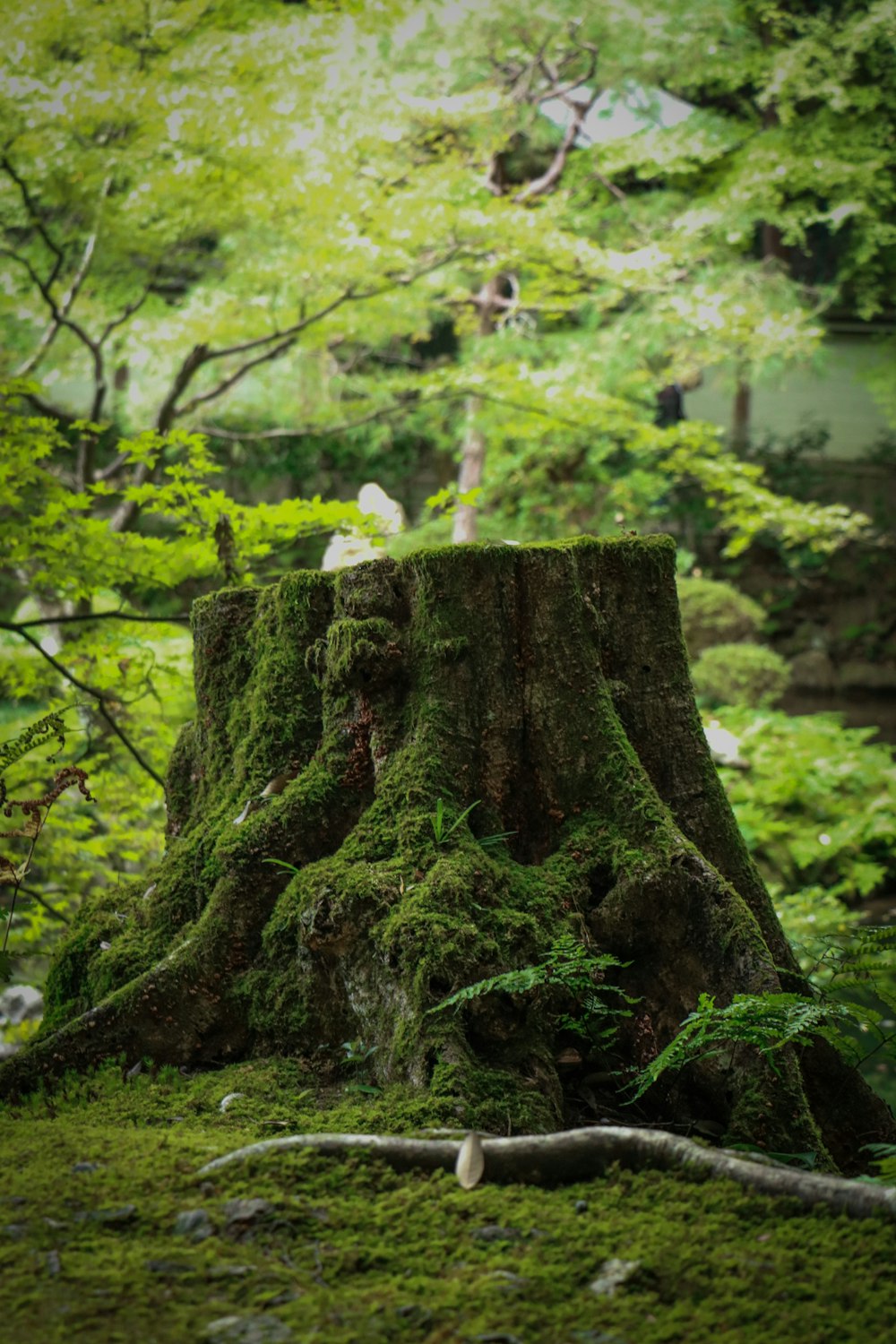
Around here, an oak is usually the biggest, oldest tree on the lot — and when one comes down, it leaves the biggest, toughest stump we deal with. The mature neighborhoods of the west metro are full of them: bur oaks that were standing before the houses were, red oaks lost to oak wilt, white oaks taken out by storms or construction. Whatever brought the tree down, the stump that is left is a different animal from a silver maple or a cottonwood.
Oak is dense, slow-grown hardwood. It grinds slower, wears teeth faster, and often comes with questions the softer species never raise — especially when oak wilt was involved. Here is what makes oak stumps different, what it actually takes to grind one, and what it is likely to cost in Minneapolis and the western suburbs.
Key Takeaways
- Oak is one of the hardest woods we grind. The same machine that walks through a cottonwood stump has to work for every inch of an oak.
- Grinding does not spread oak wilt. The disease moves through fresh wounds on living oaks and root grafts — not through a stump being chipped into mulch.
- The wood from an oak-wilt red oak needs handling. Logs can produce spore mats the following spring; chips and ground stumps do not.
- Big diameters drive the price. Oak stumps in the west metro commonly run 24 to 48 inches across, and pricing is per inch of diameter.
- Oaks rarely resprout after a proper grind. Taking the stump 4–6 inches below grade removes the collar the sprouts come from.
- Late summer is a good time to do it — the ground is dry for equipment and you can reseed the spot in the prime seeding window.
Table of Contents
- Why Oak Stumps Are a Different Job
- Oak Wilt and Your Stump: What Actually Matters
- Red, White and Bur Oak Stumps Compared
- What Grinding a Big Oak Involves
- What an Oak Stump Costs to Grind
- After the Grind: Chips, Settling and Reseeding
- Frequently Asked Questions
Why Oak Stumps Are a Different Job
Wood density is the whole story. Oak runs roughly half again as dense as the silver maple, cottonwood and boxelder that make up so many west metro removals, and a stump is the densest part of the tree — tight grain, buried compression wood, and often decades of slow growth packed into every inch. We wrote about grinding the west metro’s biggest soft-wooded stumps; oaks are rarely as wide as a monster cottonwood, but inch for inch they take considerably more grinding.
In practice that means more passes with the cutter wheel, more wear on carbide teeth, and more time on site. A softwood stump that takes 30 minutes might take an hour or more in oak at the same diameter. None of that changes what you get at the end — the stump taken 4 to 6 inches below grade, chips raked, surface leveled — it just changes how much work stands between the start and the finish. If you are curious why that depth is the standard, see our guide to how deep stump grinding goes.
Oak Wilt and Your Stump: What Actually Matters
A large share of the oak removals in the Twin Cities trace back to oak wilt, the fungal disease that has been working through Minnesota’s oaks for decades. It kills red oaks fast — often within a single summer — and homeowners are understandably nervous about doing anything that might spread it to the healthy oaks nearby.
How oak wilt actually spreads
The fungus moves two ways: overland, when sap-feeding beetles carry spores to a fresh wound on a healthy oak, and underground, through root grafts between neighboring oaks of the same group. That is why the standing rule in Minnesota is to avoid pruning or wounding oaks from April through July, when the beetles are active and the trees are most vulnerable.
Does grinding the stump spread it?
No. By the time we arrive, the tree is dead and down — there is no fresh wound on living tissue and nothing for a beetle to infect. Grinding turns the stump into small chips that dry out quickly, and dry chips do not support the fungus. If anything, getting the stump ground is a tidy end to the problem. The one caution worth knowing: an infected red oak’s roots can stay grafted to neighbors, which is why arborists sometimes sever root connections before removing infected trees in a tight stand of oaks. That decision happens at removal time, not at grinding time.
What about the logs and firewood?
The wood is the part that needs respect. Red oaks killed by oak wilt can produce spore mats under the bark the spring after they die, and those mats are what the beetles visit. Do not stack fresh oak-wilt logs next to healthy oaks. Have the wood hauled, chip it, debark it, or seal it under a tarp with the edges buried until it has fully dried. Well-seasoned, bark-loose firewood is no longer a risk.
Red, White and Bur Oak Stumps Compared
The west metro grows three oaks you will meet again and again, and each leaves a slightly different stump behind.
| Species | Typical Stump | What to Expect |
|---|---|---|
| Red oak | 24–36 in., often oak-wilt removals | Hard, straight grain; handle the logs carefully |
| White oak | 24–40 in., storm or construction loss | Densest of the three; slowest grind |
| Bur oak | 30–48 in.+, old yard and savanna trees | Huge diameter, wide root flare, long job |
Bur oaks deserve a special mention. They are the old-timers of neighborhoods like Edina, Wayzata and Deephaven — some predate the streets around them — and their stumps come with a wide, flared base that adds a lot of billable inches. Measure the stump where it is widest, flare included, because that is the diameter that determines both the time and the price.
What Grinding a Big Oak Involves
The process is the same one we described on our services page: sweep the area, check clearances, work the cutter wheel across the stump in passes, and keep going until the whole thing — flare and all — is 4 to 6 inches below grade. With oak, the differences are time and chips.
Time, because dense wood simply grinds slower. A mid-size oak stump is often an hour of grinding; a 40-inch bur oak with a big flare can be a good chunk of a morning. And chips, because a big oak stump produces a serious mound of grindings — often a pickup load or more once it is all out of the ground. We rake and level as part of every job, and the chips themselves are useful; oak grindings break down slowly, which makes them excellent, long-lasting mulch for beds and paths. We covered the options in what to do with stump grindings.
One more thing worth saying: an oak stump that gets ground properly does not come back. Oaks resprout from the stump collar at the base of the trunk, and grinding below grade removes exactly that. The sad ring of sprouts you see around old cut oaks is what happens when a stump is cut flush and left, not when it is ground.
What an Oak Stump Costs to Grind
Stump grinding in our area is priced by the inch of stump diameter, and the going range is roughly $3–$7 per inch. Oak stumps tend to land in the upper half of that range because of the grinding time involved, and because oak stumps are simply big — a 36-inch bur oak at even $5 per inch is a $180 job before any access or site factors come into play.
Every stump is different, though: diameter, flare, access, what is buried nearby. Treat any per-inch number as a starting point, not a promise — the honest answer comes from a quick look at the actual stump, which is why the quote is free. Our full Minnesota stump grinding cost guide breaks down every factor that moves the number.
After the Grind: Chips, Settling and Reseeding
Once the oak stump is out, the spot needs the same aftercare as any other — with one wrinkle. Because oak chips decompose slowly, it is extra important to clear the grindings out of the hole before you backfill with topsoil; buried oak chips will tie up nitrogen in that spot for a long time. Fill with clean soil, mound it slightly above grade to allow for settling, and seed.
If your oak came down this summer, your timing is good. Mid-August through mid-September is the prime seeding window for Twin Cities lawns, so a stump ground now can be soil-filled and seeded within days. Our guide to planting grass after stump grinding walks through the whole sequence.
Got a Big Oak Stump? That’s Our Kind of Job
Big hardwood stumps are where experience shows. We have been grinding stumps across the west metro for over 20 years — family owned, licensed and insured — and a wide old bur oak does not scare the machine or the operator. Every job ends the same way: stump 4–6 inches below grade, chips cleaned up, surface level and ready for whatever comes next.
We serve Minneapolis and the western Twin Cities, including Minnetonka, Orono, Excelsior, and every community in between. Call or text (612) 501-0602, or request a free quote online.
Frequently Asked Questions
Are oak stumps harder to grind than other stumps?
Yes. Oak is much denser than the silver maple, cottonwood and boxelder common in the west metro, so the same stump diameter takes noticeably longer to grind and wears cutting teeth faster. The end result is identical — it just takes more work to get there.
Can stump grinding spread oak wilt?
No. Oak wilt spreads through fresh wounds on living oaks and through root grafts between live trees. A stump from a dead, removed tree is neither, and the chips produced by grinding dry out too quickly to support the fungus. The risky activity is wounding healthy oaks between April and July — not grinding a stump.
How much does it cost to grind an oak stump?
Expect roughly $3–$7 per inch of stump diameter in the Minneapolis west metro, with oaks often in the upper half of that range because of the grinding time. Since oak stumps commonly measure 24 to 48 inches across the flare, exact pricing depends on the individual stump — a free quote settles it.
Will an oak stump grow back after grinding?
Rarely. Oak sprouts come from the stump collar at the base of the trunk, and grinding 4–6 inches below grade removes it. Resprouting is a problem with flush-cut stumps that were left in place, not properly ground ones.
What should I do with wood from an oak that died of oak wilt?
Red oak logs from oak-wilt trees can produce infectious spore mats the spring after the tree dies. Before then, either have the wood hauled away, chip it, debark it, or cover it tightly with a tarp and bury the edges until it dries. Fully seasoned wood with loose bark is safe to keep and burn.
How long does it take to grind a large oak stump?
A mid-size oak stump usually takes about an hour of grinding. A very large bur oak with a wide root flare can take two hours or more depending on diameter, access and how much flare has to come out. Softer species of the same size go considerably faster.
When is the best time to remove an oak and grind the stump in Minnesota?
Avoid cutting or wounding healthy oaks from April through July, when oak wilt spreads most easily — so oak removals are best scheduled for late summer through winter. The grinding itself can happen any time the ground is workable, and a late-summer grind lines up perfectly with the mid-August-to-mid-September lawn seeding window.