Drive through Minnetonka, Excelsior or the older parts of Edina and you will see them everywhere: enormous silver maples shading half a lot, cottonwoods towering over a lakeshore, boxelders crowding a fence line. These are the trees that built the west metro canopy, and they are also the trees that leave behind the biggest, widest, most awkward stumps we grind.
A big soft-wood stump is a different animal than a tidy 14-inch ash. The flare spreads wider than people expect, the roots run shallow and long, and some of these species fight back by sending up shoots after the tree is gone. Here is what actually matters when you have one of these in your yard — what drives the price, what grinding will and will not fix, and what to plan for afterward.
Key Takeaways
- The root flare is the real stump. A tree cut at 24 inches across can easily measure 36 inches or more where it meets the ground, and that is what a quote is based on.
- Silver maple, cottonwood, elm and willow sucker aggressively from their root systems, and grinding the stump does not always stop shoots coming up elsewhere in the lawn.
- Big stumps make big chip piles — often several cubic yards from one silver maple.
- Soft wood grinds fast but wide. These stumps are less about hardness and more about sheer volume and spread.
- Access usually costs more than the wood does. A backyard stump behind a 36-inch gate changes the job more than the species ever will.
Table of Contents
- Why the West Metro Is Full of These Trees
- The Root Flare Is the Real Stump
- Species by Species: What to Expect
- Suckers: The Part Grinding Doesn’t Solve
- Big Stump, Big Pile of Chips
- What a Big Stump Actually Costs
- Frequently Asked Questions
Why the West Metro Is Full of These Trees
Silver maple and cottonwood are fast, thirsty, tolerant trees that love wet feet. That describes a lot of ground out here — the low spots, the creek corridors, the yards that back up to a wetland or a lake. Around Lake Minnetonka in particular, cottonwoods have been anchoring shorelines for generations, and silver maples were planted by the thousands in postwar neighborhoods because they threw shade within a decade.
Boxelder is a different story. Nobody plants boxelder. It shows up on its own along fence lines, behind garages and in neglected corners, grows fast, and turns into a multi-stem mess that eventually has to come down. It is the tree equivalent of a volunteer, and it is one of the most common things we grind on properties in Hopkins, Mound and older parts of Minnetonka.
The upshot: when these trees come down, the stump left behind is usually wider and shallower-rooted than a comparably tall oak or ash.
The Root Flare Is the Real Stump
This is the single most misunderstood thing about stump grinding quotes. Homeowners measure across the cut surface where the saw went through, call it 20 inches, and are surprised when the estimate is based on something larger.
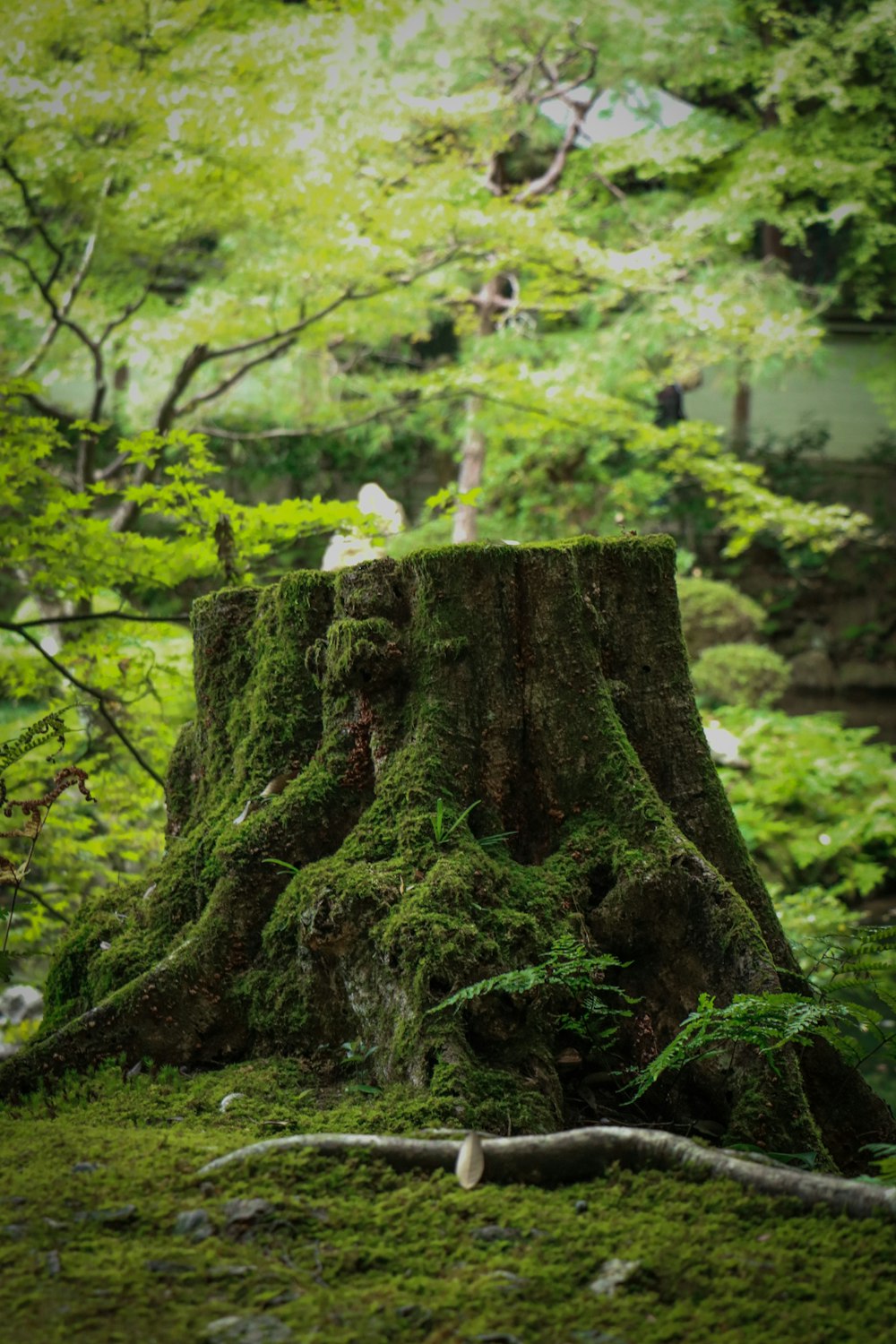
A stump is measured at its widest point at ground level, where the trunk swells out into the root flare. On a silver maple or cottonwood, that flare can be dramatically wider than the cut — buttress roots the size of your forearm running out in every direction, half-buried in turf. All of that wood is in the way. It has to be ground out, or you are left with knuckles of root sticking up through the lawn where the grinder stopped.
So when we quote a job, we measure the flare, not the stump top. It is not upselling; it is the honest description of how much wood has to disappear. If a quote you receive is suspiciously low, check whether it was measured at the cut and whether the flare and surface roots are actually included.
Species by Species: What to Expect
Every stump is its own job, but the species tells you a lot before we even pull up.
| Species | What Makes It Tricky | What to Plan For |
|---|---|---|
| Silver maple | Wide flare, heavy surface roots | Grinding well past the visible stump |
| Cottonwood | Huge diameter, soft wet wood | Very large chip volume |
| Boxelder | Multiple stems from one base | Several stumps priced as one area |
| Elm | Stringy wood, strong suckering | Follow-up on root sprouts |
| Oak | Dense, slow-cutting wood | More grinding time per inch |
| Ash | Often dry and brittle from EAB | Usually a straightforward grind |
Notice that soft does not mean easy. Cottonwood cuts like butter, but a 40-inch cottonwood base still contains an enormous amount of wood, and all of it becomes chips that have to go somewhere. Meanwhile a dense white oak of the same size takes longer per inch but produces a tidier job. If your tree was an ash taken down after emerald ash borer, we wrote a full guide on what to do with ash stumps in the west metro.
Suckers: The Part Grinding Doesn’t Solve
Here is the honest part that some outfits will not tell you. Stump grinding removes the stump and the root flare. It does not remove the lateral roots running out under your lawn — those stay in the ground and slowly decompose over the following years.
For most species that is a non-issue. But silver maple, cottonwood, elm and willow are known for sending up sucker shoots from those surviving roots. You can grind the stump perfectly and still see little shoots popping up in the grass ten or fifteen feet away the following spring. That is not a failed grind — it is the root system spending its stored energy.
How to shut suckers down
The simple answer is persistence. Mowing or cutting the shoots off at ground level, every time they appear, starves the roots of the leaves they need to recharge. Most homeowners find suckering tapers off substantially after a season or two of consistent mowing. If a patch is stubborn, the University of Minnesota Extension has practical guidance on woody vegetation control, including how and when foliar treatment is used on regrowth.
One thing not to do: ignore them for two years and let a shoot become a sapling. It is far easier to mow a six-inch sprout than to remove a young tree. The same principle applies to buckthorn stumps, which are notorious for coming back if nothing is done.
Big Stump, Big Pile of Chips
Grinding does not make wood vanish. It converts it into chips, and volume scales fast with diameter. A 12-inch stump produces a modest mound you can rake into a bed. A 40-inch cottonwood, ground a full 4 to 6 inches below grade with the flare taken out, can produce several cubic yards of grindings — a genuine pile.
You have three reasonable options, and we will talk them through on site:
- Backfill the hole and level the spot. Fastest and free, but the ground will settle as buried roots break down, and the chip-heavy soil is poor for growing grass.
- Spread the chips as mulch elsewhere. Fine for paths and around established trees once they have aged. Do not pile fresh grindings against trunks or in vegetable beds.
- Haul the excess away and backfill with clean topsoil. The right call if you want lawn back in that spot.
That last option matters more than people expect, because fresh wood ties up nitrogen in the soil as it decomposes. That is the usual reason grass comes in thin and yellow over an old stump. We covered the full fix in our guide to planting grass after stump grinding, and mid-August through mid-September is the prime seeding window in the Twin Cities — which means right now is good timing if you are reading this in late summer.
What a Big Stump Actually Costs
Stump grinding in Minnesota is generally priced per inch of stump diameter, measured across the widest point of the flare. Around here that typically runs about $3 to $7 per inch, with the spread depending on access, how many stumps are on the property, and what needs to happen with the chips.
| Stump Size | Rough Range | Main Variable |
|---|---|---|
| Small – 12 in. | Low end, often a minimum charge | Travel and setup |
| Medium – 24 in. | Mid range | Access to the stump |
| Large – 36 in.+ | Higher, flare included | Surface roots and chip volume |
| Several stumps | Better per-stump rate | One trip, one setup |
Two honest notes. First, almost every company has a minimum charge, so a single small stump rarely costs proportionally less than a big one — getting the machine to your house is a real cost. Second, if you have three or four stumps, get them all done in one visit. The savings are meaningful. For a fuller breakdown, see our Minnesota stump grinding cost guide.
Access is the other big lever. A 30-inch silver maple in an open front yard is a straightforward job. The same stump behind a narrow gate, down a slope, or tucked between a shed and a fence takes a smaller machine and more time. Tell us about the gate width and the route when you call — it makes the quote far more accurate.
Got a Big One in Your Yard?
We grind stumps of every size across the west metro, from small landscape stumps to the four-foot cottonwood bases that scare other outfits off. Every job goes a full 4 to 6 inches below grade, the flare and surface roots come out, the chips get cleaned up, and you are left with a level spot. Family owned, licensed and insured, and doing this across the western Twin Cities for over 20 years.
We serve Minneapolis and the western suburbs, including Minnetonka, Excelsior, Wayzata, Orono, Eden Prairie and every community in between. See everything we do on our services page.
Call or text (612) 501-0602, or request a free quote online.
Frequently Asked Questions
Why is a silver maple stump more expensive than the trunk size suggests?
Because the price is based on the widest point of the root flare at ground level, not the diameter of the cut. Silver maples flare out substantially, so a stump that measures 20 inches across the top can easily measure 30 inches or more at the ground, and all of that wood has to be ground out.
Will grinding stop my cottonwood from sending up shoots?
Not always. Grinding removes the stump and root flare, but the lateral roots stay in the ground. Cottonwood, silver maple, elm and willow can send up sucker shoots from those roots. Mowing or cutting the shoots at ground level every time they appear starves the roots and the sprouting usually tapers off within a season or two.
Do you grind the surface roots too?
Yes, the flare and the surface roots around the stump come out as part of the job. Roots running far out under the lawn are left in place to decompose naturally — digging those out would mean tearing up the yard.
How do you measure a stump for a quote?
Across the widest point where the trunk meets the ground, including the root flare. If you are getting quotes over the phone, measure it that way and you will get numbers you can actually compare.
How many wood chips will a large stump produce?
More than most people expect. A large cottonwood or silver maple ground below grade can produce several cubic yards of chips. You can backfill the hole with them, spread them as mulch elsewhere, or have the excess hauled off and the hole filled with clean topsoil.
Is a boxelder stump easier to grind than an oak?
The wood is softer, so it cuts faster, but boxelder usually grows as multiple stems from one base, which means several stumps clustered together. Oak is dense and slower per inch but typically a single clean trunk. Neither is a problem — they just take different amounts of time.
Can you get a grinder into my backyard?
Usually yes. Gate width and the route in are the deciding factors, so let us know what we are working with when you call. Narrow access may mean a smaller machine and a bit more time, but tight backyards are routine work for us.
How deep do you grind?
A full 4 to 6 inches below grade as standard practice, which is deep enough to plant grass over the spot and to keep a mower blade well clear of anything left behind.