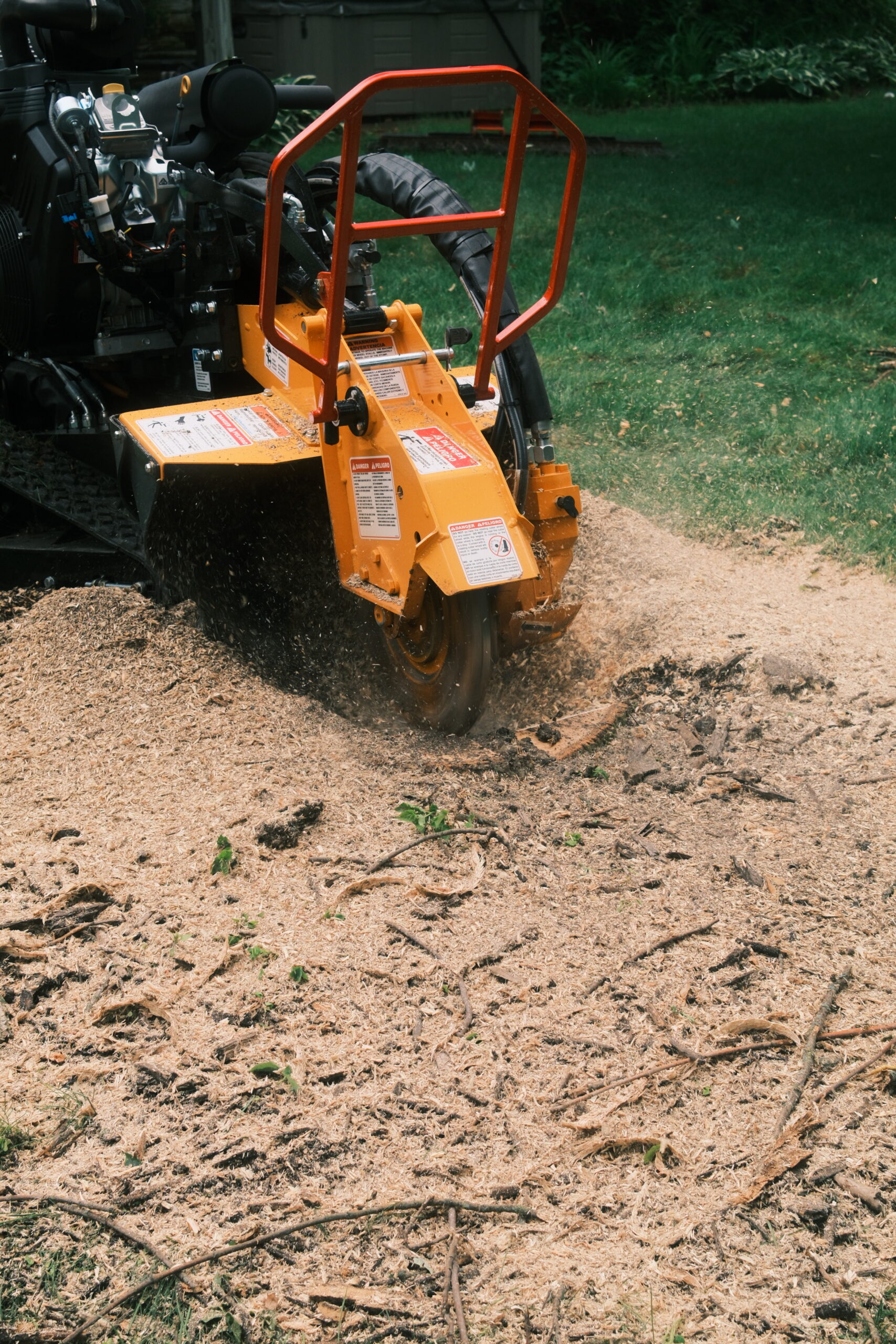
The stump is gone, the grinder is back on the trailer, and in its place sits a mound of wood chips that somehow looks bigger than the stump ever did. That is not an illusion. Grinding fluffs solid wood into loose chips, and a mid-size stump routinely produces two to three times its own volume in grindings. So now you have a decision to make: keep the pile and put it to work, or have it hauled away.
After twenty-plus years of grinding stumps across the west metro, we have seen homeowners do smart things with grindings and a few things that caused them headaches for years. This guide covers what stump grindings actually are, where they are useful, where they cause trouble, and what to do with the hole once the pile is dealt with.
Key Takeaways
- Expect a big pile. Grinding turns a stump into two to three times its volume in loose chips mixed with soil.
- Grindings make good surface mulch for paths, beds, and around established trees — but let them age before using them around anything you baby.
- Never till fresh grindings into planting soil. Decomposing wood ties up nitrogen and starves whatever you plant there.
- Do not leave the chips in the hole if you want grass. Pull them out and backfill with topsoil instead.
- Keep chips a foot or so off your siding and foundation — moist wood piled against the house invites carpenter ants.
- Hauling is optional. A good grinding crew will rake the pile into the hole, spread it, or quote a full haul-away — just decide before the job starts.
Table of Contents
- What Stump Grindings Actually Are
- Keep the Pile or Have It Hauled?
- Good Uses for Stump Grindings
- Where Not to Use Grindings
- Dealing With the Hole Itself
- Frequently Asked Questions
What Stump Grindings Actually Are
Stump grindings are not the same thing as the wood chips you buy in bags or get from a chipper truck. A grinder wheel chews the stump into a mix of coarse chips, fine shavings, bark, and a fair amount of soil that gets churned in as the wheel works below grade. On our jobs we grind 4–6 inches below grade as standard practice, so the bottom of the pile always carries some dirt with it.
That soil content matters. It means grindings break down faster than clean wood chips, but it also means they are not a premium mulch product straight out of the hole. Think of them as free, rough-cut mulch with a little topsoil mixed in — useful, but with a few rules.
Keep the Pile or Have It Hauled?
This is worth deciding before the crew shows up, because it changes the quote and the cleanup. There are really three options, and none of them is wrong — it depends on your yard and your plans for the spot.
| Option | Best For | What to Know |
|---|---|---|
| Chips raked into the hole | Wooded or low-visibility areas | Cheapest; spot will sink as chips decompose |
| Chips left in a pile | Homeowners who want free mulch | Plan where the pile goes before grinding day |
| Full haul-away | Replanting grass right away | Costs more; leaves the site ready for topsoil |
Standard practice on our stump grinding jobs is to rake the chips back into the hole and leave a clean, level surface unless you ask for something different. If you know you want lawn there this season, say so up front — hauling the grindings and backfilling with soil is a different job than raking chips level, and it is much easier to plan for it than to shovel the pile back out later.
Good Uses for Stump Grindings
Free mulch is free mulch. If you have anywhere on the property that could use a layer of wood chips, the pile pays for itself.
Mulch for Paths and Play Areas
This is the best use for fresh grindings, no waiting required. Spread them 3–4 inches deep on garden paths, dog runs, or the muddy strip along the fence. On the surface, with nothing planted in them, the nitrogen issue is irrelevant — they just suppress weeds and keep your boots clean while they slowly break down.
Mulch Around Established Trees and Shrubs
A ring of grindings around a mature tree works the same way commercial arborist chips do: it holds moisture, moderates soil temperature, and keeps the mower away from the trunk. Keep the layer to 2–4 inches, keep it pulled back from the trunk itself, and do not bury the root flare. Established woody plants pull nitrogen from deep, wide root systems, so surface chips do not starve them the way they starve a bed of annuals.
Aged Mulch for Garden Beds
For perennial and vegetable beds, patience pays. Pile the grindings somewhere out of the way for six months to a year, turning the pile once or twice. Aged grindings turn darker, break down finer, and behave much more like the mulch you would pay for. In a state where EAB has left so many ash stumps behind, a lot of west metro homeowners have turned one dead tree into two years of free bed mulch this way.
Carbon for the Compost Pile
Grindings are a classic “brown” — high-carbon material that balances grass clippings and kitchen scraps. Add them in thin layers rather than dumping the whole pile in at once; coarse chips can take a couple of years to fully break down, so screen out the big chunks or accept a chunkier finished compost.
Where Not to Use Grindings
Most grinding-chip horror stories come down to one of three mistakes.
Tilled Into Planting Soil
This is the big one. As soil microbes decompose wood, they pull nitrogen from the surrounding soil to do it — the same nitrogen tie-up that makes growing grass over a fresh stump site such a fight. Chips resting on the surface are fine; chips mixed into the root zone starve whatever you plant there for a season or more. Never rototill fresh grindings into a bed you plan to plant.
Piled Against the House
A thick, damp layer of decomposing wood against your siding or foundation is an open invitation to carpenter ants, which are a genuine nuisance in Minnesota. Keep any mulch, grindings included, about a foot away from the structure and no deeper than a few inches near it.
Filling the Hole You Want to Seed
Raking the chips back into the hole is fine if the spot just needs to look tidy. But if you want turf there, chips in the hole guarantee a sunken, yellow patch as they decompose and settle. Get them out first, then backfill with soil.
Dealing With the Hole Itself
Once the grindings are out, you are left with a shallow crater 4–6 inches below grade — deeper if surface roots were chased. Backfill it with clean topsoil, mounded a couple of inches above the surrounding lawn, because the ground will keep settling for a year or two as the roots left behind underground slowly decompose. Firm it, seed it, and top it up next season if a dip reappears.
If the spot is staying informal — a wooded edge, a future planting bed, a corner nobody sees — the chip-filled hole is perfectly fine. Nature has been composting stumps in place for a long time. The chips just speed up what the stump would have done over a decade anyway.
Get the Stump Out First — We’ll Handle the Rest
Every job we do ends with the chips managed the way you want them: raked level into the hole, piled where you can use them, or quoted for haul-away so the spot is ready for seed. Tell us your plan for the spot and we will grind and clean up to match it. Every quote is free, and most stumps are done in under an hour.
Statement Stump Grinding serves Minneapolis and the western suburbs, including Minnetonka, Eden Prairie, Wayzata, Edina, Chanhassen, and the rest of our west metro service area. Call or text (612) 501-0602, or request a free quote online.
Frequently Asked Questions
Can I just leave the grindings in the hole?
Yes, and for wooded or out-of-the-way spots that is the standard finish. Just know the spot will sink over the next year or two as the chips decompose, and grass will not grow well there until the wood is gone. If you want lawn, remove the chips and backfill with topsoil instead.
How big will the pile of grindings be?
Plan on two to three times the volume of the visible stump, because grinding fluffs solid wood into loose chips and pulls in soil from below grade. A 24-inch stump can easily produce a pile that fills the bed of a pickup.
Can I use stump grindings as mulch right away?
On paths, play areas, and around established trees and shrubs, yes — fresh grindings work fine as surface mulch. For vegetable and perennial beds, let the pile age six months to a year first so the early, nitrogen-hungry stage of decomposition happens in the pile instead of in your bed.
Will stump grindings attract termites?
Termite pressure in Minnesota is very low, so that is rarely a real concern here. The insect actually worth planning around is the carpenter ant, which is why we recommend keeping chips at least a foot away from your foundation and siding.
Are chips from ash or buckthorn stumps safe to use?
Generally yes. Finely ground chips are considered low-risk for spreading emerald ash borer, unlike intact firewood — though ash wood should still stay within quarantined counties. Buckthorn spreads by berries and root resprouts, not by its chips, so the grindings themselves are safe mulch.
Why can’t I grow grass in the grindings?
Decomposing wood ties up the soil nitrogen that grass seedlings need, and loose chips dry out too fast for good germination. Seed thrown on grindings comes up thin and yellow, if it comes up at all. Clear the chips, backfill with soil, then seed.
Do you haul the grindings away?
We can. Standard practice is to rake the chips into the hole and leave a level surface, but if you want the spot ready for topsoil and seed, ask for haul-away when you get your quote so it is priced into the job.
How long do stump grindings take to break down?
Fine shavings mixed with soil can disappear in a season or two. Coarse chips in a dry pile can hang around for two to three years. Moisture, soil contact, and turning the pile all speed things up considerably.