Search “how to get rid of a tree stump” and you will find a dozen confident answers: drill it and pour in Epsom salt, buy a box of stump killer, burn it, dig it out with a mattock, or just let it rot. We have been grinding stumps across the west metro for over 20 years, and we have been called to plenty of yards where a homeowner tried two or three of those first. So this is the plain version of what each method actually does, how long it takes, and what it costs you in money and weekends.
None of this is a sales pitch for grinding over everything else. Some stumps are small enough to dig out in an hour. Some can sit and rot without hurting anything. But most of the “natural” methods are slower and less effective than the internet suggests, and a few are illegal inside city limits. Here is the honest rundown.
Key Takeaways
- Epsom salt and rock salt do not remove a stump. At best they help dry out the wood; the stump is still there for years.
- Chemical stump removers speed up decay, not removal. You are typically still looking at a year or more, and the product is meant as a prelude to burning.
- Burning a stump is prohibited in most Twin Cities suburbs and is a real hazard in a lawn with buried roots and nearby fences.
- Digging works for small stumps under about 8 inches, but it turns into a full-day fight fast on maple, oak or elm.
- Grinding is the only method that gets a mid-size stump out of your yard the same day, usually for roughly $3–$7 per inch of diameter.
- If your tree sprouts from the roots — boxelder, silver maple, cottonwood, buckthorn, elm — treat the cut surface before you leave it, no matter which method you pick.
Table of Contents
- Epsom Salt and Rock Salt
- Chemical Stump Removers
- Burning a Stump
- Digging It Out by Hand
- Letting It Rot
- Stump Grinding
- Every Method Side by Side
- Frequently Asked Questions
Epsom Salt and Rock Salt
This is the most popular DIY method online, and it is the one that produces the most disappointed homeowners. The recipe: drill a grid of deep holes in the top of the stump, pack them with Epsom salt (magnesium sulfate) or rock salt, add water, cover with a tarp, and wait.
What actually happens: the salt pulls moisture out of the wood it touches and makes the stump a slightly less comfortable place for the tree to keep living. That can help kill a freshly cut stump that is trying to resprout. What it does not do is make the stump go anywhere. A 20-inch maple stump treated with Epsom salt is still a 20-inch maple stump a year later, just a little drier. Full decomposition still takes years, and you have spent that time mowing around it.
The rock salt problem
Rock salt (sodium chloride) is worse. It leaches into the surrounding soil and can damage the lawn, the flower bed and the roots of nearby trees. If you are going to try a salt method, Epsom salt is the less harmful choice, and you should keep your expectations at “helps it die,” not “removes it.”
Chemical Stump Removers
The boxed products at the hardware store are mostly potassium nitrate. The label instructions usually tell you to drill holes, pour in the granules, add hot water, and wait four to six weeks for the wood to become soft and punky. The unspoken second half of the instructions is that you then burn it, because potassium nitrate is an oxidizer that helps the wood burn more completely.
Two catches. First, most products say they work on seasoned stumps, not fresh ones. If the tree came down last month, you are supposed to wait, often a year or more, before the chemical does much at all. Second, the “four to six weeks” on the box gets the outside of the stump soft. The heartwood of an oak or elm shrugs it off. In practice, chemical removal on a mid-size stump is a one- to two-year project that still ends with burning or digging.
Cut-stump herbicides are a different thing
Do not confuse stump removers with cut-stump herbicides (glyphosate or triclopyr concentrate painted on the fresh cut). Those are excellent at one job: killing the root system so the stump does not resprout. They do nothing to remove the wood. For buckthorn especially, a cut-stump treatment is the right move, and we covered it in our buckthorn stump removal guide.
Burning a Stump
Burning is the traditional rural method, and it does work on a dry, seasoned stump given enough time and fuel. In the west metro it is mostly off the table. Minneapolis and most of the surrounding suburbs restrict open burning to small recreational fires in an approved pit, and stumps, brush and yard waste are typically excluded outright. Outside city limits, Minnesota DNR burning permits still apply during much of the year. Check your city’s fire code before you strike a match, and expect the answer to be no.
Even where it is legal, burning a stump in a lawn is a poor idea. Fire follows the roots underground and can smolder for days, well past where you can see it. That is a risk to fences, sheds, gas lines and neighboring trees. And a burned-out stump still leaves a charred crater full of roots that you have to backfill and reseed.
Digging It Out by Hand
For a small stump, digging is the honest DIY option. If the trunk is under about 8 inches across and the tree was a shallow-rooted species like a spruce, lilac or young ornamental, a mattock, a sharp spade and a reciprocating saw with a pruning blade will get it out in an hour or two. Dig a trench around the stump, cut each root as you expose it, then lever the stump out.
The trouble starts with the trees that actually grow big in Minnesota yards. A 16-inch silver maple has a root flare 4 to 5 feet across and roots as thick as your arm. Oaks send down a taproot. Elms and cottonwoods have dense, tangled root mats. Homeowners routinely spend a full weekend on one of these and end up with a half-excavated crater and a stump that still will not budge. We get the call on Monday.
If you do dig one out, you also need to deal with a much bigger hole than grinding leaves. Pulling a stump takes the root ball with it; grinding leaves the roots in place and just needs the chip pile leveled.
Letting It Rot
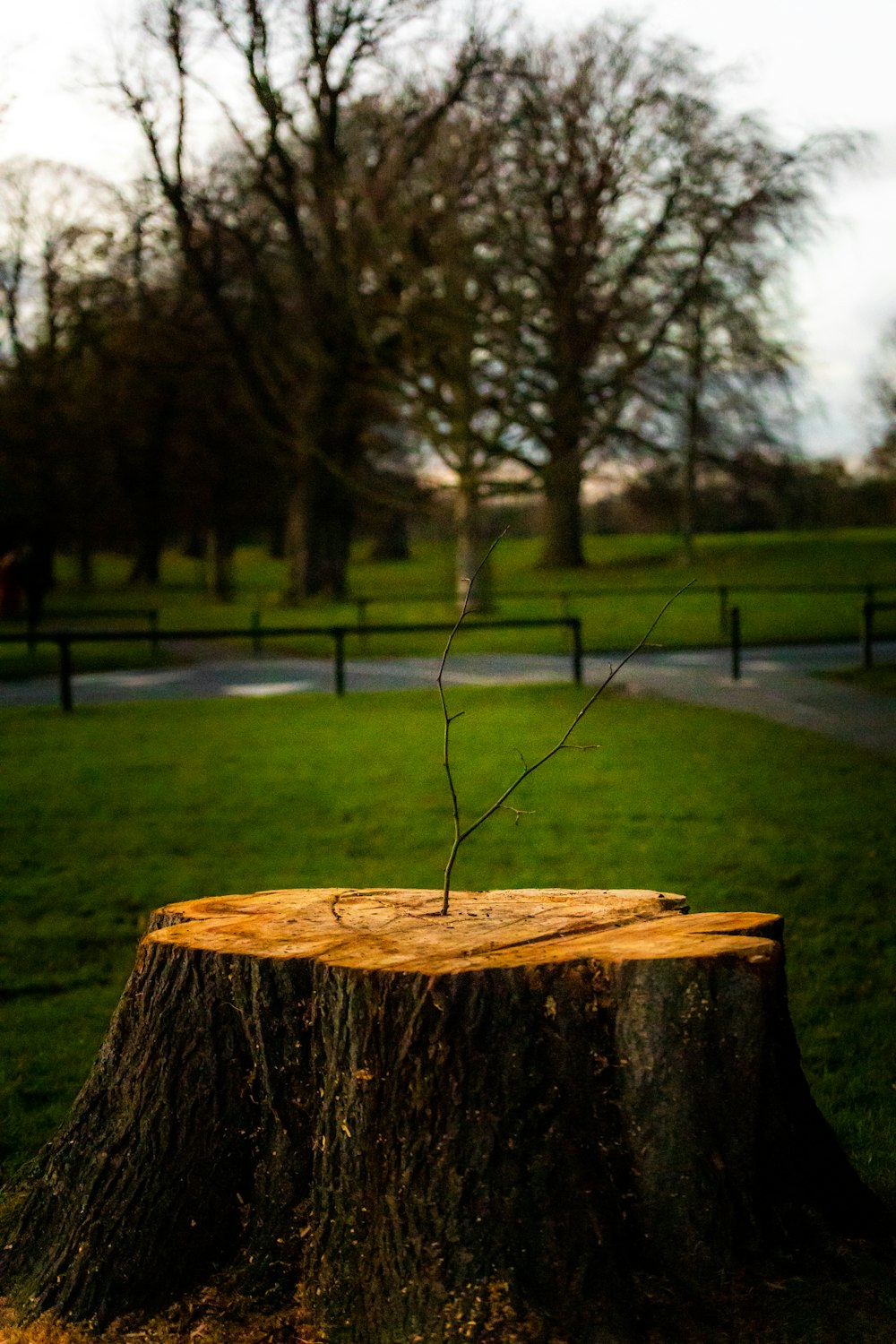
Doing nothing is a legitimate choice in the right spot. A stump at the back of a wooded lot, out of the way of mowing and foot traffic, will break down on its own. How long that takes depends on the species and size: soft woods like cottonwood, boxelder and birch might crumble in 3 to 7 years, while a big oak or black locust stump can hold its shape for 15 years or more. You can speed things along by keeping it moist and covered with soil or compost, which is the “natural” method that actually does something.
The downsides are the same ones we covered in what happens if you leave a tree stump in the ground: root suckers, carpenter ants, fungus, a tripping hazard, and a spot you cannot use for anything else. For a stump in the middle of a lawn or next to a driveway, waiting a decade is not much of a plan.
Stump Grinding
Grinding is the method that ends the problem the same day. A stump grinder is a machine with a spinning carbide-toothed wheel that chews the stump into chips, from the top down and out through the root flare. We take stumps 4 to 6 inches below grade as standard practice, rake the chips into the hole or haul them if you prefer, and leave a level surface you can top with soil and seed. A typical mid-size stump takes 20 to 45 minutes; the rest of the visit is setup and cleanup.
Cost depends on diameter, species, how many stumps there are and how easy the access is. The established range on this site is roughly $3–$7 per inch of stump diameter, with a minimum charge for a single small stump. That is a ballpark, not a quote; every stump is different, which is why we look at yours before we give you a number. See our full Minnesota stump grinding cost guide for the details.
What grinding does not do
Grinding leaves the roots in the ground, where they decompose over the next several years. For most homeowners that is fine, and it is what you want if the stump is close to a foundation, sidewalk or utility line. If you need every root gone, say for a new foundation or a deep footing, that is full stump removal, a bigger, more expensive excavation job that is rarely necessary for a lawn.
The other thing to know: if the tree was a sucker-prone species and it is still alive, grinding alone will not always stop the sprouts. Have the stump treated with a cut-stump herbicide before grinding, or be ready to mow or pull the sprouts for a season until the roots run out of stored energy. We see this most on boxelder, silver maple, cottonwood, elm and buckthorn.
Every Method Side by Side
Here is how the options stack up for a common west-metro job: a single 18-inch hardwood stump in an open lawn.
| Method | Time to Gone | Typical Cost | Works on Large Stumps? | Legal in City? |
|---|---|---|---|---|
| Epsom salt | Years | $10–$30 | No | Yes |
| Chemical remover | 1–2 years, then burn or dig | $15–$40 | Poorly | Yes (burning usually not) |
| Burning | Days, once seasoned | Low | Yes | Usually no |
| Digging by hand | Hours to a weekend | Tools, sweat | Under ~8 in. | Yes |
| Let it rot | 5–15 years | Free | Eventually | Yes |
| Stump grinding | Same day | ~$3–$7 per inch | Yes | Yes |
If you are weighing the rental route, we ran the numbers in stump grinder rental vs. hiring a pro. The short version: a rental grinder costs a good chunk of what a pro charges for one stump, and the small rental units struggle on anything over about 12 inches.
Skip the Experiments. Let Us Grind It.
We have nothing against a homeowner who wants to dig out a small stump on a Saturday. But if you have already drilled the holes, poured the salt and waited a year, the fastest way to get your yard back is a grinder. We show up, grind it 4 to 6 inches below grade, clean up the chips and leave a level spot ready for seed. Family owned, licensed and insured, and grinding stumps across the west metro for over 20 years.
We serve Minneapolis and the western Twin Cities, including Minnetonka, Edina, Eden Prairie, Chanhassen, and every community in between. See what we do on our services page, or browse the rest of the blog.
Call or text (612) 501-0602, or request a free quote online.
Frequently Asked Questions
Does Epsom salt really get rid of a tree stump?
No. Epsom salt can help dry out and kill a stump that is trying to resprout, but it does not remove the wood. The stump still takes years to decompose on its own, and in the meantime it is still in your yard.
How long does a chemical stump remover take to work?
The box usually says four to six weeks to soften the wood, but that applies to a seasoned stump, not a fresh one. On a mid-size hardwood stump, realistic timing is a year or more, and the product is designed to be followed by burning, which most Twin Cities cities do not allow.
Can I burn a tree stump in my yard in Minnesota?
Inside Minneapolis and most west-metro suburbs, no. Open burning rules generally limit fires to small recreational pits and exclude stumps, brush and yard waste. Outside city limits, DNR burning permits and seasonal restrictions still apply. Check with your city before considering it.
What is the fastest way to get rid of a tree stump?
Stump grinding. A professional grinder takes a typical stump 4 to 6 inches below grade in well under an hour, and the spot can be backfilled and seeded the same day. Every other method is measured in weekends or years.
What is the cheapest way to remove a stump?
For a small stump under about 8 inches, digging it out yourself costs nothing but time. For anything larger, grinding is usually the cheapest option that actually finishes the job, because DIY chemical and salt methods rarely remove a big stump and rental grinders cost nearly as much as hiring a pro.
How long does it take for a stump to rot naturally?
Roughly 3 to 7 years for soft woods like cottonwood, boxelder and birch, and 10 to 15 years or more for oak, elm and other dense hardwoods. Keeping the stump moist and covered with soil or compost speeds it up somewhat.
Will the stump grow back after I grind it?
Most species will not. Sucker-prone trees like boxelder, silver maple, cottonwood, elm and buckthorn can send up sprouts from the remaining roots for a season or two. Treating the cut stump with a herbicide before grinding, or simply mowing the sprouts until the roots exhaust themselves, takes care of it.
Do I need to remove the roots too?
Usually not. Grinding leaves the roots in the ground, where they decompose over several years without causing problems. Full root removal is only needed if you are building a foundation, footing or hardscape directly on the spot.