Drive any older neighborhood in Minnetonka, Edina or Wayzata and you will see them: white-barked birches with bare, dead tops and a few green branches hanging on down low. Paper birch has had a rough run in the west metro. Hot summers, dry spells and the bronze birch borer have taken out thousands of them, and the stumps they leave behind are their own kind of job.
Birch stumps are not the biggest stumps we grind, but they are some of the oddest. Most were planted as clumps, so you are dealing with three, four or five trunks growing out of one root crown. The roots run shallow and wide instead of deep. And homeowners usually have questions about whether the stump can spread the borer to the birches still standing. Here is what we have learned grinding birch stumps across the west metro, and what you should expect from the job.
Key Takeaways
- Paper birch is the west metro’s most common casualty. Heat and drought stress it, and the bronze birch borer finishes it off from the top down. River birch is largely resistant.
- A clump birch grinds as one wide stump, not three or four small ones. The trunks are fused below grade, so the quote is based on the whole footprint.
- Birch roots are shallow and wide. That makes grinding fast, but surface roots out in the lawn are a separate decision.
- A ground stump is not a borer reservoir. The beetle lives under the bark of living or freshly dead wood. The bigger risk is the logs and brush, not the stump.
- Fall is a good time to grind. Dry ground, no frost yet, and the spot can be prepped for spring seeding or a replacement tree.
Table of Contents
- Why So Many West Metro Birches Are Coming Down
- Grinding a Multi-Stem Birch Clump
- Birch Roots: Shallow, Wide and Thirsty
- Does the Stump Spread Bronze Birch Borer?
- When to Grind a Birch Stump in Minnesota
- What to Plant After a Birch
- What Birch Stump Grinding Costs
- Frequently Asked Questions
Why So Many West Metro Birches Are Coming Down
Paper birch is a northern tree. In its home range it grows in cool, moist soil with its roots in the shade. Planted in a sunny front yard in Eden Prairie with a driveway on one side and full afternoon sun on the other, it spends most summers stressed. Stressed birch is exactly what the bronze birch borer looks for.
The borer is a native beetle whose larvae tunnel under the bark and cut off the tree’s plumbing. Damage starts at the top of the tree and the tips of branches, then works inward and down into the main stems. If your birch has a dead crown, thinning leaves, and small D-shaped exit holes in the bark, that is the usual story. Once dieback reaches the major limbs, the tree rarely recovers, and most of the birch stumps we grind are the end of that process.
Which birches are at risk
Paper birch and the European white birches are the most susceptible. River birch, the one with the peeling cinnamon-colored bark, is considered resistant and is the birch the University of Minnesota Extension steers people toward for this area. If you are grinding a paper birch stump and thinking about what to plant next, that matters, and we cover it below.
Grinding a Multi-Stem Birch Clump
Most landscape birches in the Twin Cities were sold and planted as clumps: several seedlings set together so they grow as one multi-trunk specimen. Above ground you see three or four trunks. Below ground they have grown together into a single root crown.
That changes how we measure and grind the stump. A clump is not three 8-inch stumps. It is one wide, irregular stump that might span 24 to 36 inches across once you include the flare where the trunks meet. We measure across the whole footprint at ground level, the same way we would a single trunk, because that is the wood the grinder has to chew through. If you want to measure yours before you call, our guide on how to measure a stump for a quote walks through it.
The good news is that birch is a relatively soft, fast-decaying hardwood, and clump stumps are wide rather than deep. The grinder covers more ground on a clump than on a single trunk, but it does not have to fight dense wood or a taproot. A typical clump birch stump is a 30 to 60 minute job, ground 4 to 6 inches below grade and raked level.
| Stump Type | Typical Width | Wood Density | Grinding Effort |
|---|---|---|---|
| Single-stem birch | 10–18 in | Soft to medium | Low |
| Clump birch (3–5 stems) | 24–36 in | Soft to medium | Moderate, mostly width |
| Mature oak | 24–40 in | Very hard | High |
| Silver maple | 30–48 in | Medium | High, huge surface roots |
If the stems came down at different times and the stump is a mix of one fresh cut and a couple of half-rotted stubs, that is fine. We grind the whole crown at once. Just mention the multiple stems when you request a quote so we size the job correctly.
Birch Roots: Shallow, Wide and Thirsty
Birch roots stay close to the surface. That is part of why the tree struggles in hot, dry yards, and it is why a mature clump birch often has roots humping up through the lawn several feet out from the trunk.
Standard grinding takes the stump and the root flare 4 to 6 inches below grade. Surface roots running out into the lawn are a separate item. Many people leave them; birch roots decay faster than oak or maple roots, and a couple of seasons of mowing and settling usually softens the humps. If a root is tripping people or making the mower scalp, we can chase it and grind it flush. Ask when you book and we will price it with the stump. Our post on what happens to roots after grinding covers the decay timeline in more detail.
Will a birch stump sprout?
Some birches, river birch especially, will send up shoots from the root crown after the trunks are cut. Paper birch does it less, and old, borer-killed trees almost never do. Grinding well below the root crown removes the tissue those sprouts come from, so a ground birch stump is very unlikely to come back. If a stump has already started sprouting, that is a sign the crown is still alive and grinding is the right fix.
Does the Stump Spread Bronze Birch Borer?
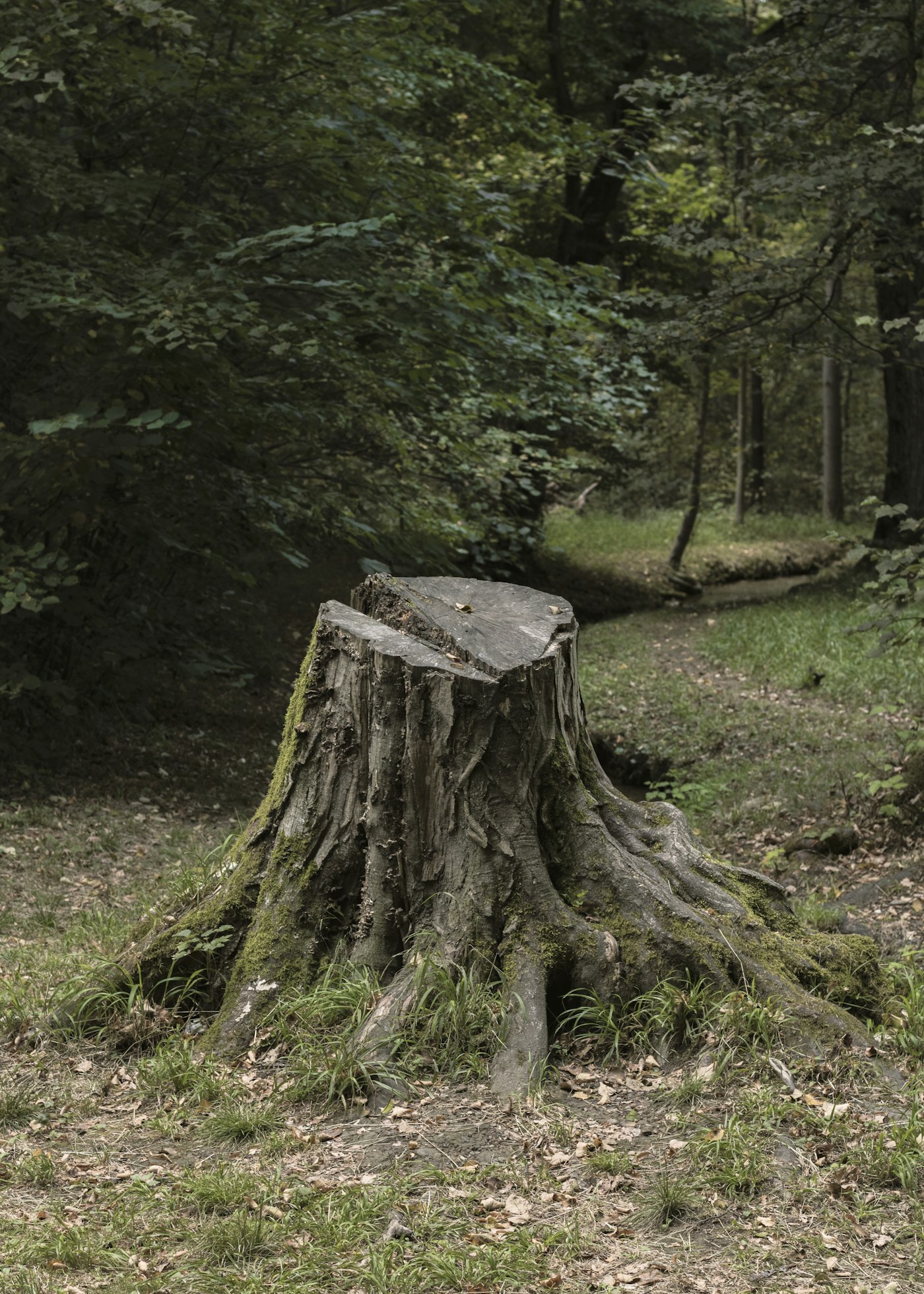
This is the question we get most on birch jobs, and the honest answer is: the stump is the least of your worries. Bronze birch borer larvae feed in the living tissue just under the bark of the trunk and branches. Adults emerge from that wood in late spring and early summer and fly to other stressed birches to lay eggs.
A stump ground to chips 4 to 6 inches below grade is not habitat. What can still carry the beetle is the wood that came off the tree: the logs, the limbs, and especially any birch firewood stacked next to your surviving trees over the winter. If the tree was removed while it still had live bark and borer activity, get that wood chipped or hauled off the property before spring rather than leaving it in a pile by the garage.
The bigger favor you can do your remaining birches is to keep them watered through dry stretches and mulched over the root zone. Healthy, unstressed birch is far less attractive to the borer. A sunny, compacted, dry spot is where the next one goes.
When to Grind a Birch Stump in Minnesota
Right now, early fall, is about as good as it gets. The ground is dry and firm, so the machine leaves no ruts on the way in. There is no frost yet. And once the stump is out, you have time to backfill and either seed during the late-summer seeding window or prep the spot for a spring planting.
Birch stumps do rot faster than most, and some homeowners ask whether they can just wait it out. You can, but a clump stump is wide enough that it will be an eyesore and a mower obstacle for years, and a rotting birch stump is a magnet for carpenter ants and fungus in the meantime. If the plan is to replant in that spot, a stump left to rot is in the way of the new tree. For the full seasonal picture, see our post on fall stump grinding before the ground freezes.
What to Plant After a Birch
If you loved the look of the birch, you have options that hold up better here. River birch handles heat and wet soil and resists the borer. Some newer paper birch selections were bred for better borer resistance, but they still want cool, moist roots. If the original tree died in a hot, exposed spot, putting another paper birch in the same hole is asking for a repeat.
Whatever you choose, do not plant directly into fresh birch grindings. Clear the chips, backfill with topsoil, and if you are planting a tree, set it a few feet off the old stump location so the roots are in real soil rather than a pocket of decomposing wood. Our guide to planting a tree where a stump was goes through it step by step.
What Birch Stump Grinding Costs
Like every stump we grind, birch is priced by diameter. Across the west metro that generally works out to roughly $3 to $7 per inch, with a minimum for a single small stump. A clump is measured across its full footprint, so a four-stem birch that spans 30 inches is quoted as a 30-inch stump, not four 8-inch stumps. Because birch wood is softer than oak and the stump is shallow, a birch clump usually sits at the lower end of the per-inch range for its size.
Surface root chasing, hauling the chips away, and tight access all affect the final number, and the only way to get an exact price is a quick look at the stump. Our Minnesota stump grinding cost guide has the full breakdown, and a free quote takes a couple of minutes.
Get That Birch Stump Out Before the Ground Freezes
We grind birch clumps every week across the west metro, and we grind them the same way we grind everything: 4 to 6 inches below grade, chips raked level, and a straight answer on the price up front. Family owned, licensed and insured, with over 20 years grinding stumps in the western suburbs.
We serve Minneapolis and the western Twin Cities, including Minnetonka, Edina, Wayzata, Eden Prairie, Orono, and every community in between. See everything we do on our services page.
Call or text (612) 501-0602, or request a free quote online.
Frequently Asked Questions
How is a clump birch stump measured for a quote?
Across the whole footprint at ground level, including the flare where the trunks meet. A clump birch is one fused root crown, so it is quoted as a single wide stump rather than several small ones.
Can bronze birch borer spread from a ground stump?
No. The borer lives under the bark of living or freshly dead trunks and branches, not in ground-up wood chips below grade. The logs and brush from the removal are the material to get off the property, especially before spring emergence.
Will a birch stump grow back after grinding?
Very rarely. River birch can sucker from the root crown if the crown is left intact, but grinding 4 to 6 inches below grade removes it. Paper birch and borer-killed trees almost never sprout.
Do birch stumps rot faster than other stumps?
Yes, birch is a soft, fast-decaying wood, and its roots break down faster than oak or maple. That said, a wide clump stump still takes years to disappear on its own and attracts carpenter ants and fungus in the meantime.
Should I grind the surface roots too?
Only if they are a tripping or mowing problem. Birch surface roots decay relatively quickly and usually settle within a few seasons. If you want them gone now, we can chase and grind them for an added charge.
Can I plant another birch in the same spot?
You can, but choose river birch or a borer-resistant selection, clear the grindings, backfill with topsoil, and offset the new tree a few feet from the old stump. Replanting paper birch in a hot, dry spot invites the same problem.
How long does it take to grind a birch clump?
Most clump birch stumps take 30 to 60 minutes including cleanup, depending on width and access. The wood is soft, so the work is mostly covering the footprint rather than fighting hard wood.